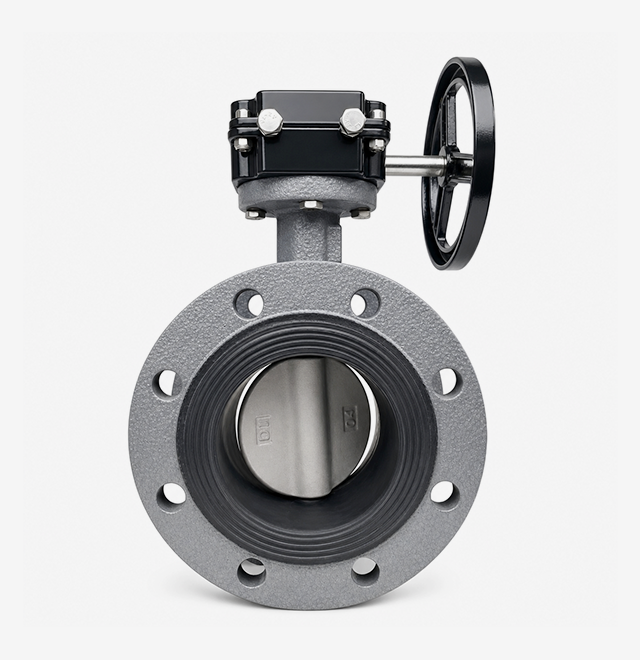
If you manage procurement for a water treatment plant, pumping station, or EPC pipeline project, choosing the wrong valve body material is a risk you cannot afford. A ductile iron double flanged butterfly valve gives you a flanged, bolt-on connection on both faces of the body, creating a stable and leak-resistant joint that holds firm under operating pressure. Covering selected sizes from DN50 to DN1200 with PN10 or PN16 nominal ratings, this valve type may suit water, sewage, air, and other compatible liquids.

Understanding Ductile Iron Double Flanged Butterfly Valves
What Makes Ductile Iron Different
Ductile iron (QT450 grade) contains graphite nodules, whereas gray cast iron has graphite flakes. The microstructure results in a tensile strength of around 450 MPa and an elongation of about 10%, i.e. it bends a little before it breaks. The ductility may enhance the impact and hydraulic loading resistance compared to gray cast iron, but the body appropriateness still relies on the design, pressure rating, supports, transient analysis and relevant material standard.
How the Double Flanged Design Works
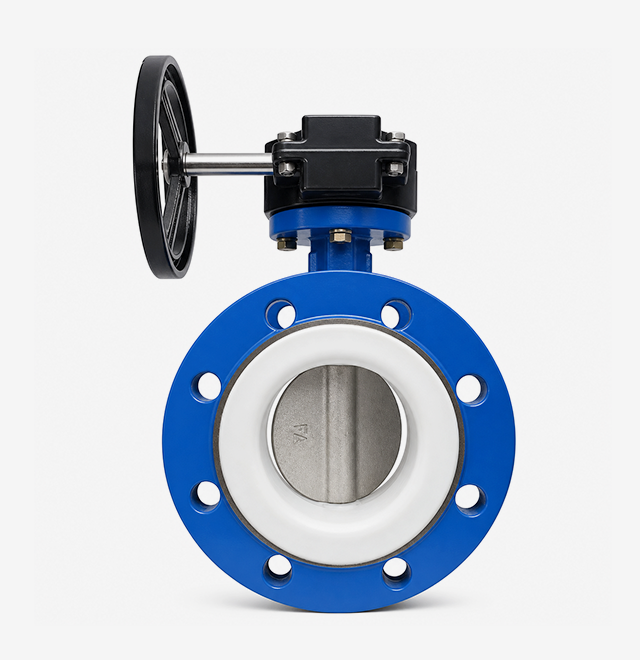
The double-flanged body has flanges cast on both sides of the pipe. If you attach the valve between two identical pipe ends, both sides of the unit go up at the same time. Compared with wafer body, twin flanged butterfly valve may provide more firm connection and greater support for installation and maintenance. It is not to be used as a replacement for pipe supports, thrust restraint, or an engineering anchor unless explicitly allowed by the project design.
Applicable Standards and Pressure Ratings
Flange dimensions, drilling and face to face length should be checked against the specified GB or EN 1092-2 configuration and the project designs. The actuator mounting pad may be provided to the relevant ISO 5211 interface where applicable subject to the valve and actuator designs. PN10 and PN16 are popular nominal classes for water and wastewater. Allowable pressure depends on temperature and material. If required, face-to-face measurements may be to EN 558 Series 13/14, thus check the series before buying.
Advantages and Applications of Ductile Iron Double Flanged Butterfly Valves
The double flanged butterfly valve is used in city infrastructure because it meets the two main issues in large-bore procurement: structural stability and confirmed sealing. Here are some of the most important technical benefits of this device:
- Body covering corrosion resistant. Interior and external surfaces may be coated with fusion-bonded epoxy (FBE) to the thickness required by the model and project. The coating and whole valve design for drinking water service should be approved as needed by the target market, e.g. NSF/ANSI/CAN 61 certification, when applicable. Coating life depends on surface preparation, coating system, soil or water conditions, installation, and maintenance. Do not claim a set service life without supporting data.
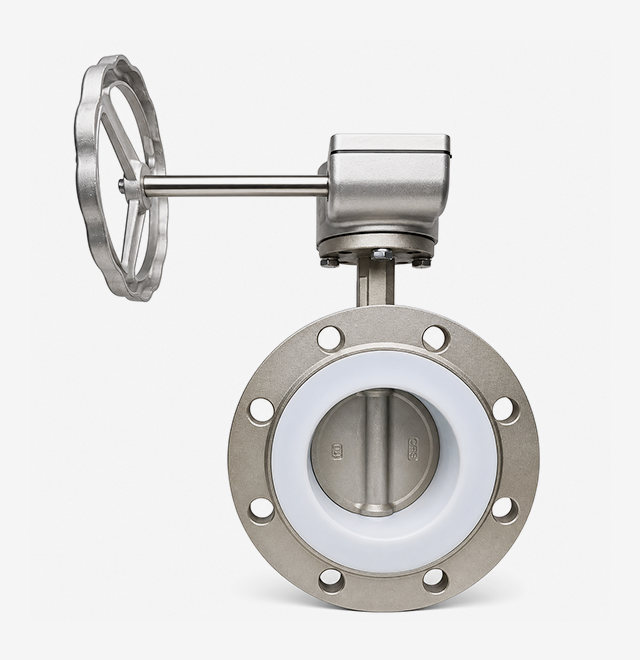
- Material flexibility of seats. The seat ring material (EPDM, NBR or PTFE) influences chemical compatibility. EPDM may fit suitable potable and wastewater service. PTFE may be used for certain oxidizing or chemical services, including some sodium-hypochlorite applications, provided that concentration, temperature, pressure and compound compatibility are verified. NBR may be suitable for some petroleum-based media. Finally, to prevent the danger of swelling, permeation or increased torque, the medium name, concentration, temperature, pressure and operation cycle should be confirmed before quoting.
- Large bore gear operation. For DN600 to DN1200 a worm-gear operator decreases the handwheel effort to a bearable level and on compatible gearboxes a self-locking drive that can keep disk position without a separate brake. An electric or pneumatic actuator may be mounted via an appropriate ISO 5211 interface and connector. Shaft: shaft alternatives include Q235, 2Cr13, SS304 and SS316. Shaft selection should be made according on the medium, pressure, temperature and corrosion environment.
Coating on the body that resists corrosion. A fusion-bonded epoxy (FBE) covering of at least 250 microns covers both the inside and outside sides. For drinking-water service, the coating must be approved for the specific wetted application and destination market; coating thickness alone does not establish certification. Underground or submerged coating performance depends on the complete coating system, surface preparation, environment, installation, and inspection records.
Water Treatment and Pumping Stations
The main valves that let water into and out of filter banks and clear-water tanks in a water supply plant are usually DN400 to DN1200. After the line is isolated, depressurized, drained, and properly supported, a double-flanged valve may be removed for maintenance without cutting the pipe. The actual procedure depends on access, pipe supports, valve weight, and the project installation details.
HVAC and Chilled-Water Systems
On cooling tower headers in large HVAC plant rooms, DN200 to DN600 valves are used. EPDM seats may be compatible with selected glycol-water mixtures at low temperature, but the glycol type, concentration, temperature, pressure, and compound data must be confirmed. Throttling should be allowed only when the valve has been selected and approved for control duty.
Industrial and Chemical Pipelines
A PTFE seat and CF8M (SS316) wetted components may suit selected chemical services, but the seat, disc, shaft, fasteners, body, concentration, temperature, and pressure must be checked individually. For higher-pressure chemical service, CF8, CF8M, or WCB may be considered only after the complete material-compatibility review.
Comparing Ductile Iron Double Flanged Butterfly Valves to Other Valve Types
Ductile Iron vs. Cast Iron and PVC
When gray cast iron is shocked, it breaks without warning. PVC bodies can only handle DN300 and below, and they can't handle the bending loads that large-bore pipes put on them. Ductile iron is available in selected sizes and may offer a practical balance of strength, weight, and cost for public infrastructure. The appropriate body material still depends on pressure, temperature, transient loads, corrosion, coating, and the applicable material standard.
Double Flanged vs. Wafer and Lug Types
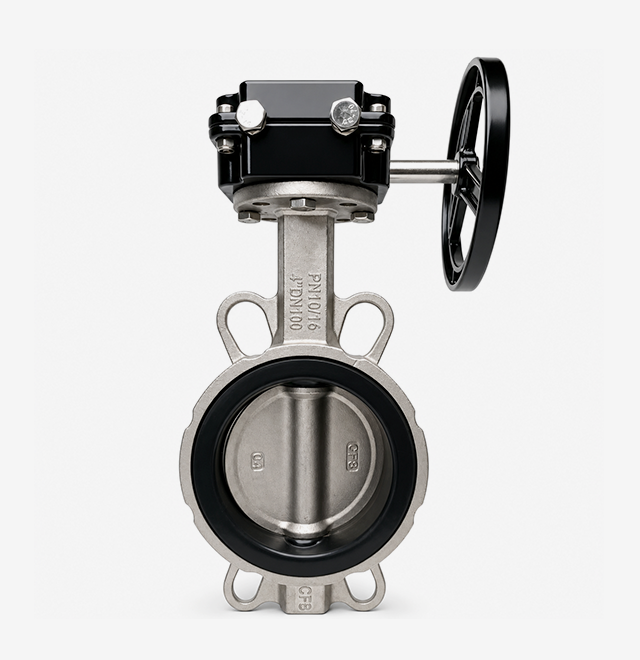
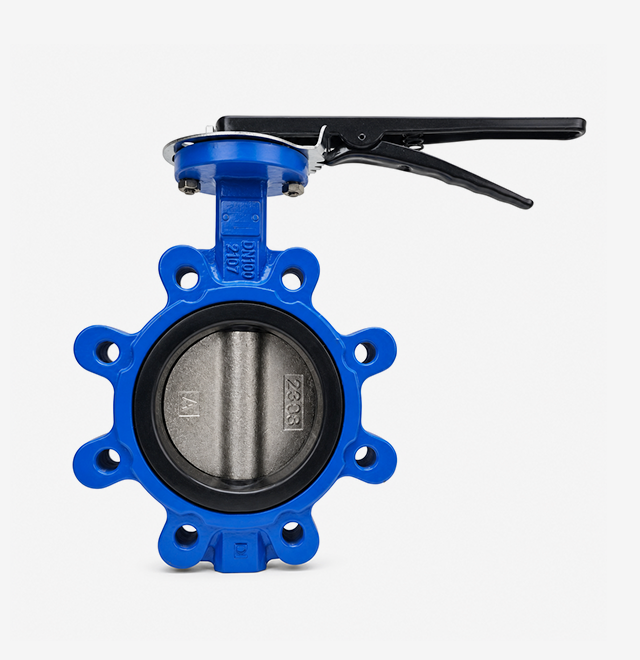
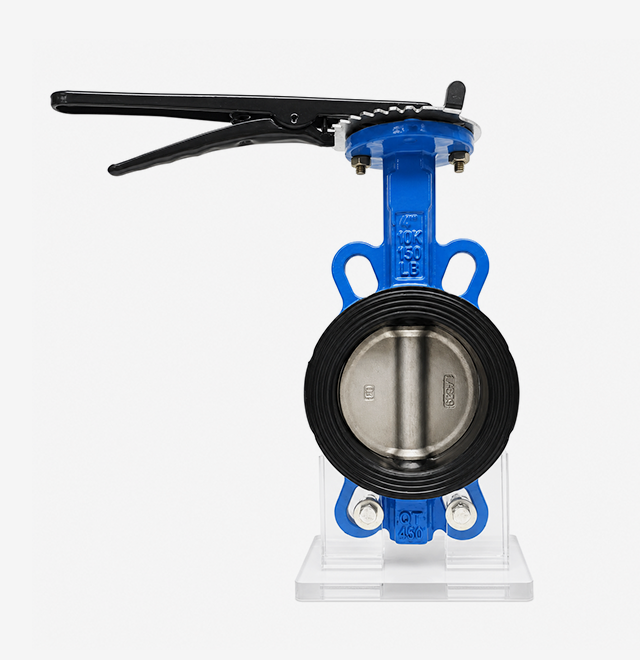
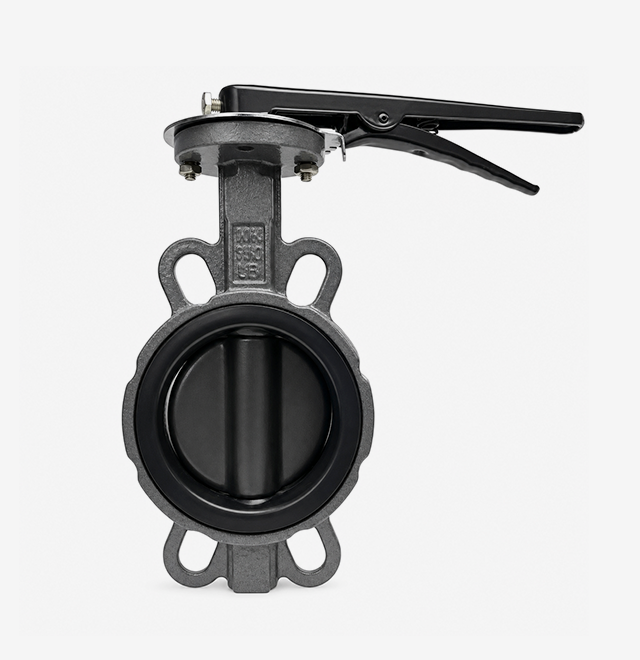
A wafer butterfly valve doesn't have any flanges of its own; it uses the pipe flanges and through-bolts to line up and move the load. That may work for properly aligned pipeline runs, but disc clearance and flange alignment must be checked at every size. A double-flanged body can simplify alignment and provide a more rigid connection, but it does not automatically correct pipe misalignment or qualify for dead-end pressure. Dead-end service requires a written end-of-line rating for the specific model, size, pressure, and installation condition.
When to Choose a Gate Valve Instead
When pigging or when pressure-drop budget is very tight, gate valves are useful because they let full-bore flow through with no blockages. A concentric butterfly valve has a disc in the flow path when open and therefore creates pressure loss that should be checked against the project head-loss budget. For isolation-only service, it may be more compact and cost-effective than a gate valve, but the actual space, weight, and price comparison depends on size, pressure class, materials, actuator, and installation.
Procurement Insights: How to Source the Right Ductile Iron Double Flanged Butterfly Valve
The Six Parameters to Confirm Before Quotation
Before ordering a ductile iron double flanged butterfly valve, confirm at least the size (DN), pressure class (PN), medium and concentration, working temperature, design flow and differential pressure, installation orientation, connection standard and drilling, actuator or gearbox requirement, quantity, and delivery schedule. Confirming these details before quotation reduces the risk of selection errors, delivery delays, and site rejection.
Documents That Cannot Be Missing at Acceptance
Project inspectors may require a shell test record, seat-leakage test record, material certificate for the body, coating or lining report, and dimensional inspection record. Test pressures, leakage criteria, flange dimensions, and whether records are issued per valve or per batch must follow the applicable product standard, purchase order, and inspection plan. Do not present 1.5×PN or 1.1×PN as universal requirements.
Lead Times and OEM Considerations
Stock availability, dispatch timing, custom-configuration lead time, inspection, private-label marking, and export packaging must be confirmed in the quotation. OEM/ODM scope may include material selection, dimensions, connection type, coating, marking, and packing, subject to the confirmed drawings, specifications, production schedule, and logistics.
Why Ductile Iron Double Flanged Butterfly Valves Are the Preferred Choice
Total Cost Over the Asset Life
A ductile iron double flanged butterfly valve may offer a lower initial cost than some imported alternatives, but the comparison should include size, pressure rating, materials, actuator, coating, documentation, freight, installation, and lifecycle maintenance. Seat inspection and replacement intervals depend on actual service conditions. Factory sealing documentation is valuable, but it does not replace correct installation, commissioning, and field maintenance.
Real-World Project Evidence
Some valves made by Tianjin Tangzheng Valve Co., Ltd. were sent to the Tianjin part of China's South-to-North Water Diversion Project, which is one of the biggest civil water transfer projects ever. Full-series hydrostatic test records, material traceability, and phased delivery coordination were needed for that project. These are the same kinds of records that are needed for international EPC bids.
Future Direction: Smart Actuation and Advanced Coatings
It is now standard on DN300 and higher to have electric actuators with fieldbus transmission and outputs that measure force. Graphene-enhanced epoxy coats are now being tested for their service life, and they should provide even better corrosion protection in harsh soil conditions. The double flanged body format is liked by both trends. This is because the ISO 5211 pad and the rigid flanged body give smart actuators the stable mounting base they need.
Conclusion
There aren't many other valve types that can match the overall cost-effectiveness, structural strength, and proven sealing of a ductile iron double flanged butterfly valve at large bore sizes. The double-flanged body can handle dead-end loads that wafer valves can't. The seat material choices are suitable for water, wastewater, and mild chemicals, and each valve can have its own documentation trail made for EPC bids. That mix makes the risk of having to do work again as small as possible for procurement managers who are working under tight deadlines and strict acceptance standards.
FAQ
1.What pressure classes are available for a double flanged butterfly valve?
Both PN10 and PN16 are standard pressure classes that can be used for most HVAC and municipal water needs. These ratings are based on shell test pressures of 15 bar and 24 bar, which were measured during factory hydrostatic testing.
2.Can I get a per-valve hydrostatic test certificate?
Yes. A shell pressure test at 1.5× PN and a seat leakage test at 1.1× PN are done on each valve. To meet the requirements of the EPC and the water authority for acceptance, test records are given out individually for each valve, not for each batch.
3.Which seat material should I choose for sodium hypochlorite service?
PTFE is usually used for the seats of sodium hypochlorite dosing lines. EPDM and NBR shouldn't be used because oxidizing media make them swell and let air through. Before you place your order, you should get written confirmation of the medium name, quantity, and temperature.
4.What is the lead time for large-bore custom valves?
Sizes that are in stock can be sent out within 24 hours. After the drawing is confirmed, most custom setups from DN600 to DN1200 are shipped within 7 to 15 business days. This includes disks with special coatings or materials that aren't normal.
5.Does the valve comply with EN 1092-2 flange dimensions?
Yes. For ductile iron flanges, the bolt circles, face sizes, and thickness all meet EN 1092-2 standards. You can also get GB-standard flanges when the design plans call for metric GB bolt shapes.
Get a Fast Quote from TZD — Ductile Iron Double Flanged Butterfly Valve Manufacturer
Tianjin Tangzheng Valve Co., Ltd. (TZD) sells ductile iron double flanged butterfly valve in sizes DN50 to DN1200. They offer factory-direct prices, test paperwork for each valve, and the ability to do OEM and ODM work. You will get a detailed technical quote within an hour during business hours after you confirm your six parameters: size, pressure, medium, temperature, connection standard, and quantity. Send an email to youweipan21@gmail.com or go to tangzhengvalves.com to start your inquiry right away.

References
1. American Water Works Association. ANSI/AWWA C504: Rubber-Seated Butterfly Valves, 2023 edition.
2. British Standards Institution. BS EN 593: Industrial Valves — Metallic Butterfly Valves. BSI, 2017.
3. International Organization for Standardization. ISO 5752: Metal Valves for Use in Flanged Pipe Systems — Face-to-Face and Centre-to-Face Dimensions. ISO, 2021.
4. European Committee for Standardization. EN 1092-2: Flanges and Their Joints — Circular Flanges for Pipes, Valves, Fittings and Accessories — PN Designated Cast Iron Flanges. CEN, 1997.
5. International Organization for Standardization. ISO 5211: Industrial Valves - Part-Turn Actuator Attachments, 2026 edition.
6. Val Matic Valve and Manufacturing Corp. Technical Bulletin: Selection and Application of Butterfly Valves in Water and Wastewater Systems. Val Matic, 2019.