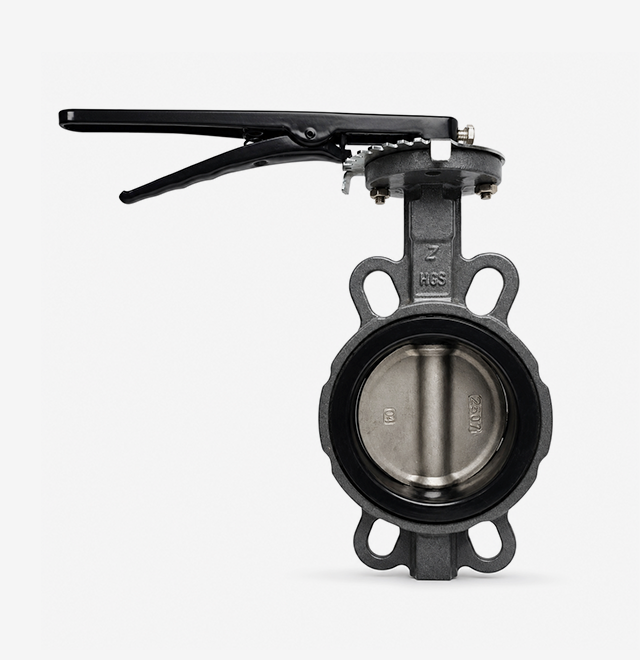
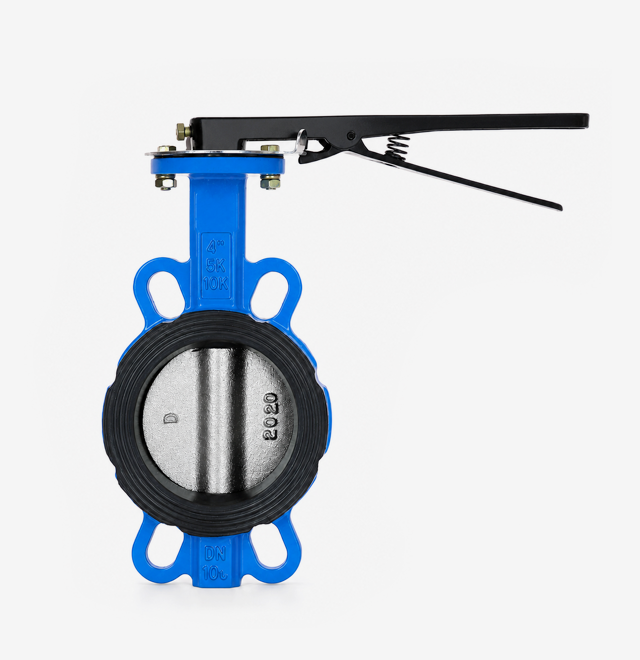
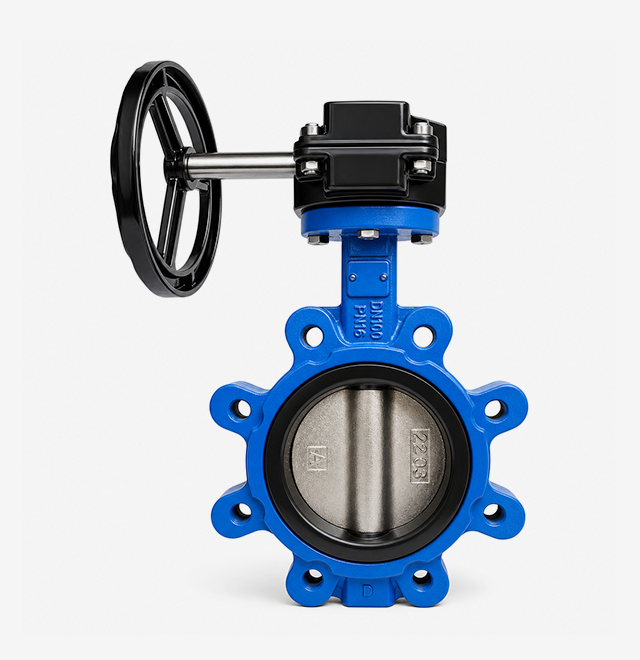
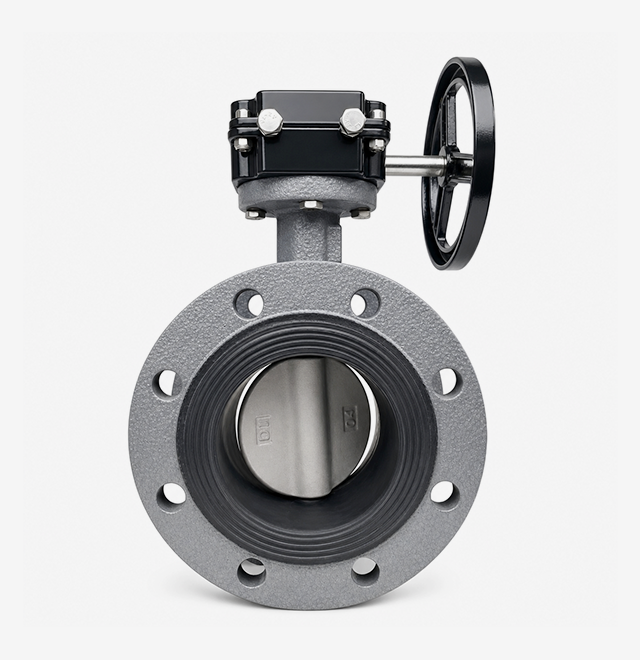
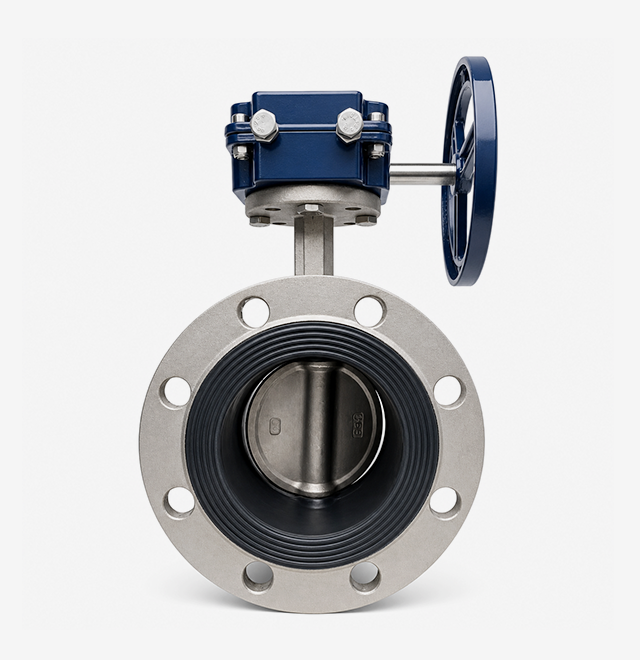
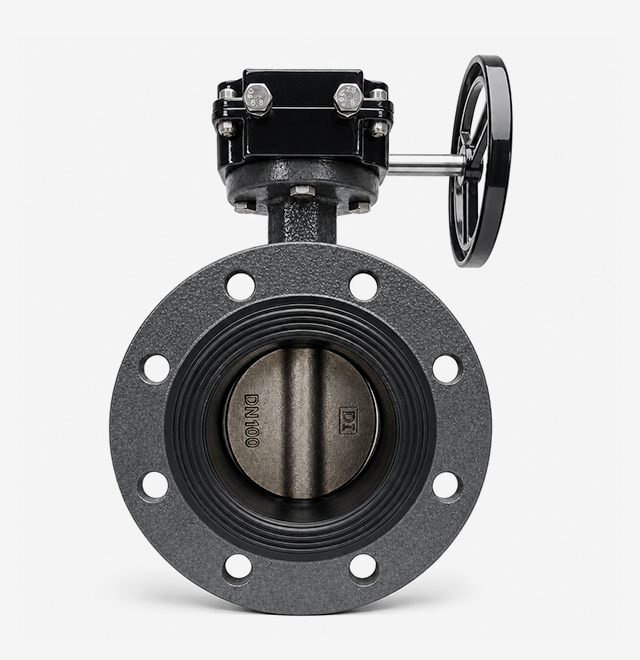
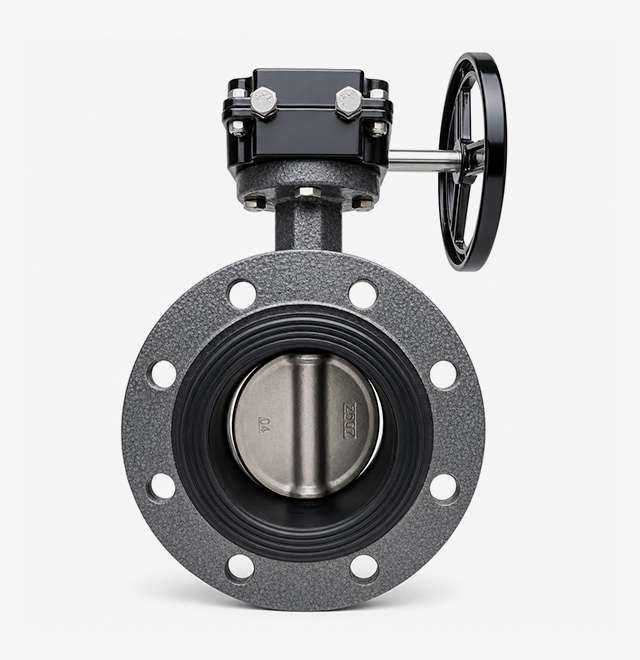
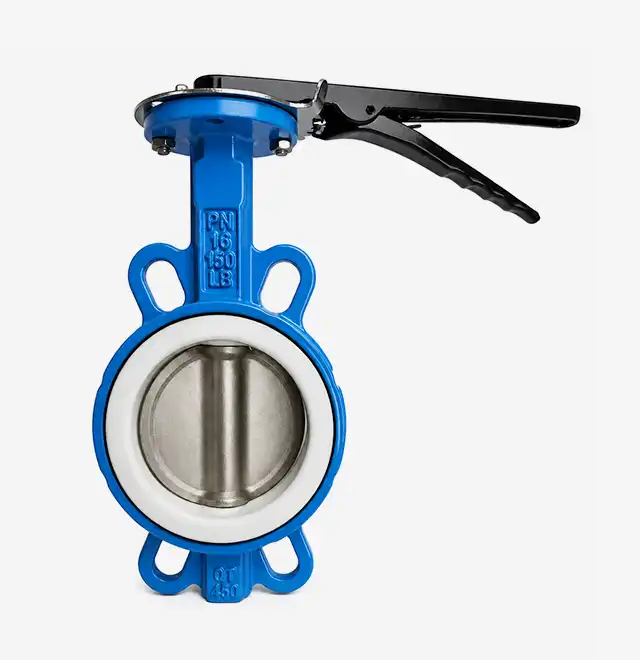
Pumping-station managers and mechanical or electrical package specifiers know that one unsuitable component can affect a project. Many DN100 pump discharge lines use a flanged check valve to allow forward flow and prevent reverse flow after pump shutdown. A suitable selection may help reduce water-hammer, noise, and warranty risks, but the result depends on the complete pump and piping system. This article explains what to confirm before ordering a 4-inch DN100 flanged silent check valve.
Understanding the 4-Inch DN100 Flanged Check Valve
It is worth knowing what separates this type of valve from the alternatives before you compare your options.
Construction and Materials
A flanged silent check valve has two flanged end connections and a spring-supported disc. Body options are WCB carbon steel, QT450 ductile iron, CF8, and CF8M stainless steel; disc options follow the body options. Seat material (EPDM, NBR, or PTFE) is selected for the medium. Stems can be 2Cr13, SS304, or SS316, and springs SS304 or SS316. Pressure ratings are PN10 or PN16, which covers most water supply and drainage duty points. Temperature capability is set by the seat compound rather than by a single catalogue figure — EPDM for water and air service, NBR for oil-contact duty, PTFE for the widest range — so confirm the exact limit for the model you order against the product data sheet.
How the Spring-Assisted Disc Works
The spring biases the disc towards the closed position. Forward flow opens the disc against the spring force. When the pump trips and forward velocity falls, the spring helps close the disc before reverse flow develops fully. Faster closure may reduce the pressure surge associated with slow closure, but the effect depends on flow velocity, pipe length, pump run-down time, and the valve’s closing characteristics. Confirm the expected result with a system transient calculation.
Flange Standards That Cover Two Drawing Sets
A 4-inch DN100 flanged check valve may be supplied with flange drilling compatible with EN 1092-2 or GB/T 17241.6, subject to the selected model. These standards define connection dimensions and pressure designations; they do not by themselves certify the safety of the complete valve. Confirm the valve’s pressure rating, materials, testing, and installation requirements separately.
Benefits of Using a Flanged Silent Check Valve in Pump Systems
The main performance considerations are:
- Water-hammer control: a spring-assisted closing mechanism may reduce the development of reverse flow compared with a slowly closing swing check valve. The actual reduction depends on the complete system and should be checked by a transient study where water-hammer risk is important.
- Low head loss: the disc geometry is designed to limit pressure loss, but the actual value should be confirmed with a Cv or pressure-drop test result when the pump-system design requires a defined value. Do not rely on the geometry alone.
- Noise and vibration reduction: disc chatter can occur when low-velocity flow repeatedly moves the disc against the seat. Spring loading may help stabilise the disc under suitable partial-flow conditions, but the result depends on the valve design and operating point.
- Flexible installation: The valve may be installed in horizontal or vertical pipelines but the installation orientation relies on the valve design and the flow direction requirements for the individual model. Confirmation of orientation during selection is necessary, as an improperly orientated disc may not open entirely or it may enhance rather than minimise pressure surges.
Taken together, these characteristics tend to produce cleaner acceptance tests, fewer return visits to site, and a lower lifetime cost for the pump station.
Material Selection Guides Performance
The body material should be selected for the medium, pressure, temperature, and corrosion conditions. QT450 ductile iron may suit clean water and neutral liquids in normal service. WCB carbon steel may be considered where the design requires different mechanical properties. CF8 and CF8M stainless steel may suit selected sewage or mildly corrosive duties. The seat compound must also be matched to the medium: EPDM, NBR, and PTFE have different compatibility limits. Confirm the complete material combination against the product data sheet.
|
Situation
|
Flanged silent check valve
|
Consider instead
|
|
Pump discharge, DN50–DN300, PN10/PN16
|
Well suited
|
—
|
|
Frequent pump start/stop with high transient risk
|
Helps, but must be verified
|
System transient analysis and surge protection
|
|
Very tight space between flanges
|
Needs room for bolted flanges
|
Wafer check valve
|
|
Small-bore, low-pressure line
|
Heavier and more costly than needed
|
Threaded check valve
|
|
Abrasive slurry duty
|
Seat and disc must be reviewed
|
Metal-seated or lined option
|
Comparing the Flanged Check Valve with Other Valve Types
A swing check valve uses a hinged disc and may close more slowly because its movement depends on gravity and reverse flow. A spring-assisted silent check valve may close faster and can be removed through its bolted flange connection, but the suitability of each design depends on flow rate, pressure loss, installation space, and the project requirements.
Practical Applications and Installation Notes
Silent-pattern flanged check valves are commonly used in fire pump rooms, pumping stations, municipal water mains, and building drainage systems. A spring-assisted closing mechanism may help reduce reverse-flow risk in these applications, but the final suitability depends on the valve model and system conditions.
Before installing, confirm that the valve flange faces and the mating pipe flanges use compatible dimensions and pressure ratings. Do not mix incompatible drilling patterns or flange facings at one joint. Follow the gasket manufacturer’s bolt-tightening sequence and the valve manufacturer’s installation instructions. Any site pressure or leakage test should follow the project specification, the manufacturer’s instructions, and the applicable testing standard.
Procurement and Supplier Insights
Tianjin Tangzheng Valve Co., Ltd. manufactures flanged check valves in Jinnan District, Tianjin. Shipment arrangements, stock availability, lead time, and port routing should be confirmed for each order. Bespoke material combinations and OEM/ODM orders may require additional production time.
Quality control may include incoming-material inspection, machining checks, shell-pressure testing, seat-closure testing, final inspection, and document review. The required test pressure and acceptance criteria should be stated in the product standard, project specification, or quotation. Export packing and material or test documents can be confirmed before shipment.
The supplier may also be able to quote related items such as butterfly valves, gate valves, Y-type strainers, and rubber expansion joints. If several products are purchased together, confirm that each item has its own specification, test record, and document package.
Conclusion
Reverse flow after shutdown, water-hammer pressure spikes, and disc chatter are three of the most common problems at pump stations. A 4-inch DN100 flanged check valve with a spring-assisted disc can help reduce each of them, but it is not a substitute for system design: the closing behaviour that limits one problem can interact with the others, and the actual transient response depends on the whole pump and piping system. A structured review of the selection parameters — DN, pressure rating, flow rate, medium and concentration, operating temperature, installation orientation, flange standard, and quantity — confirms that the right body material, seat elastomer, and installation orientation have been chosen. That is what separates a trouble-free commissioning from an expensive callback, and it is also what keeps the total cost of the pump station down.
FAQ
1. How does a spring-assisted disc help reduce water hammer?
Before the reverse flow reaches full speed, the spring closes the disc. That slows down the rate of change in flow, which in turn slows down the pressure surge that a disc slowly closing would cause. The effect depends on the flow rate, pipe length, and pump run-down time in the particular system, so a transient calculation for the installation should be done to confirm the expected drop.
2. What parameters are needed before a quotation?
DN (nominal size), pressure rating, flow rate, medium and concentration, operating temperature, installation orientation, flange standard (EN 1092-2 or GB/T 17241.6), and quantity. It is also helpful to list any project boundaries on reaction time or head loss.
3. Can the valve be installed vertically?
Some models may be installed vertically, but this is not universal. The allowed orientation depends on the valve design, flow direction, cracking pressure, and manufacturer’s instructions. Confirm the permitted orientation before ordering.
4. Is OEM or private-label supply available?
Yes. OEM and ODM orders are accepted against customer drawings, samples, or project details covering material, size, connection, finish, and marking.
5. What warranty coverage applies?
Warranty coverage and duration should be stated in the final quotation or contract and will depend on the installation and operating conditions.
Source Your 4-Inch DN100 Flanged Check Valve Directly from TZD
Tianjin Tangzheng Valve Co., Ltd. manufactures flanged check valves from DN50 to DN300 at PN10 or PN16, with QT450, WCB, CF8, and CF8M body and disc options. Seat materials may include EPDM, NBR, and PTFE. Send the application parameters for a technical review and quotation, or visit tangzhengvalves.com.
References
1. Tullis, J. P. Hydraulics of Pipelines: Pumps, Valves, Cavitation, Transients. Wiley, 1989.
2. Wylie, E. B., and Streeter, V. L. Fluid Transients in Systems. Prentice Hall, 1993.
3. American Water Works Association. ANSI/AWWA M11: Steel Pipe — A Guide for Design and Installation. AWWA, 2004.
4. American Petroleum Institute. API Std 598: Valve Inspection and Testing. API, 2016.
5. International Organization for Standardization. ISO 5208:2015: Industrial valves — Pressure testing of metallic valves. ISO, 2015.
6. European Committee for Standardization. EN 1092-2:1997+A1:2004: Flanges and their joints — Circular flanges for pipes, valves, fittings and accessories, PN designated — Part 2: Cast iron flanges. CEN, 2004.