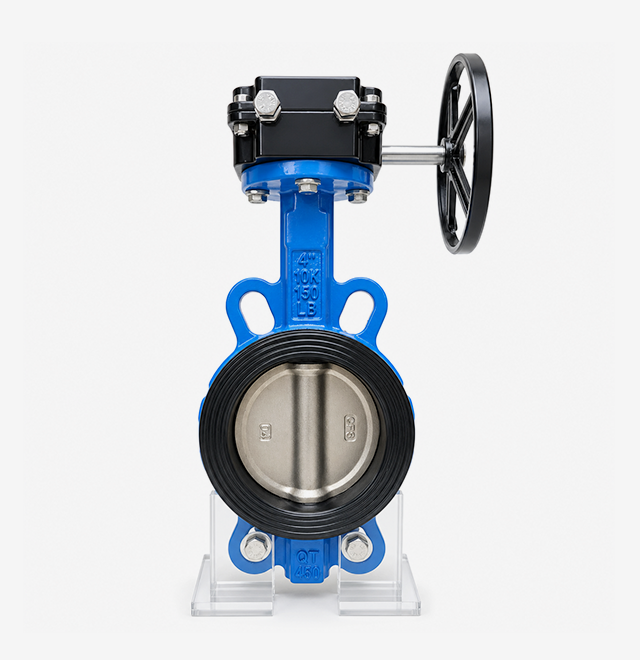
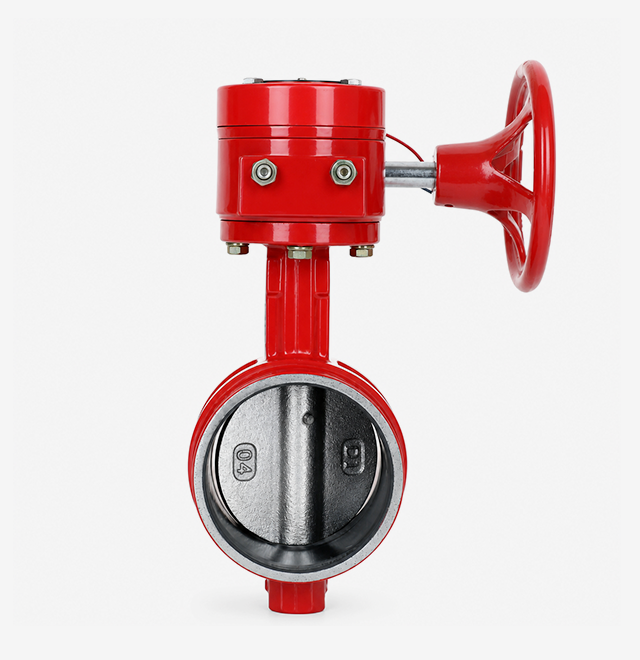
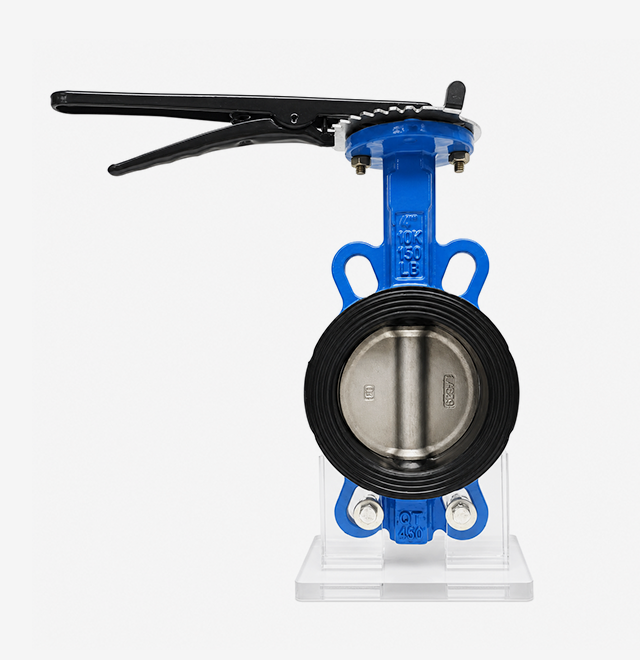
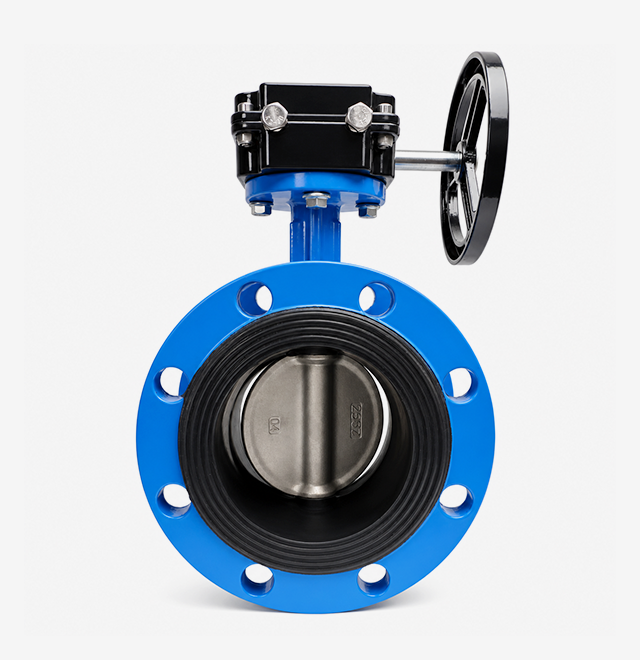
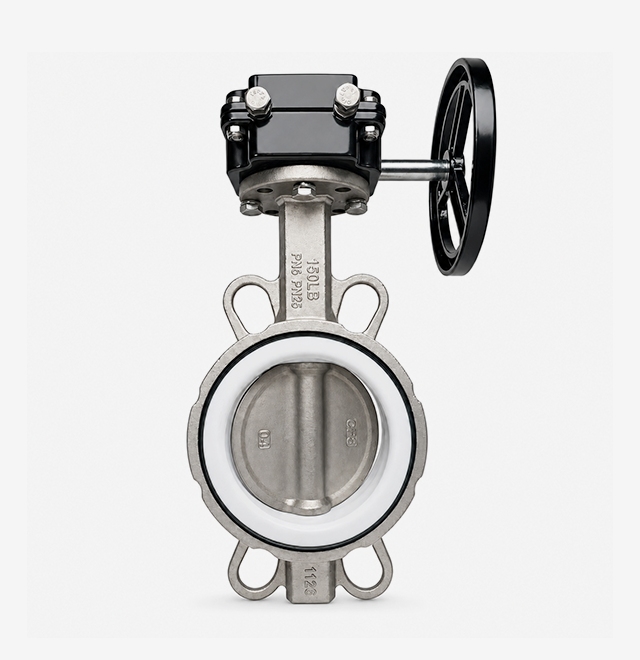
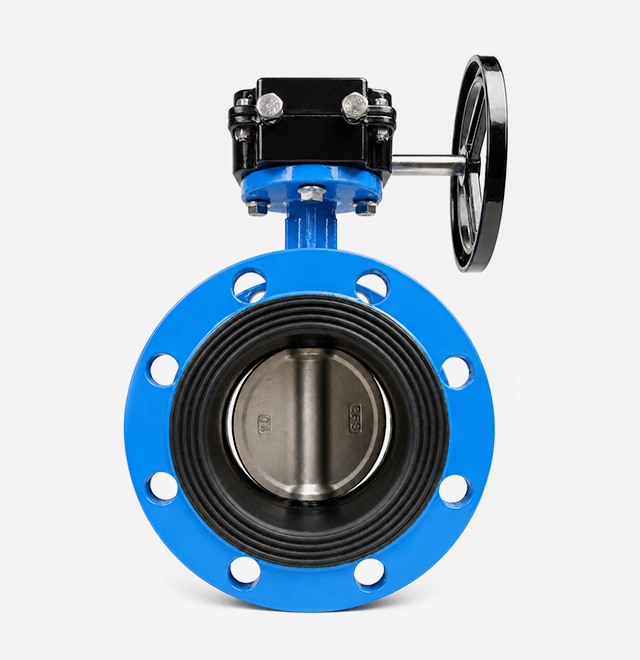
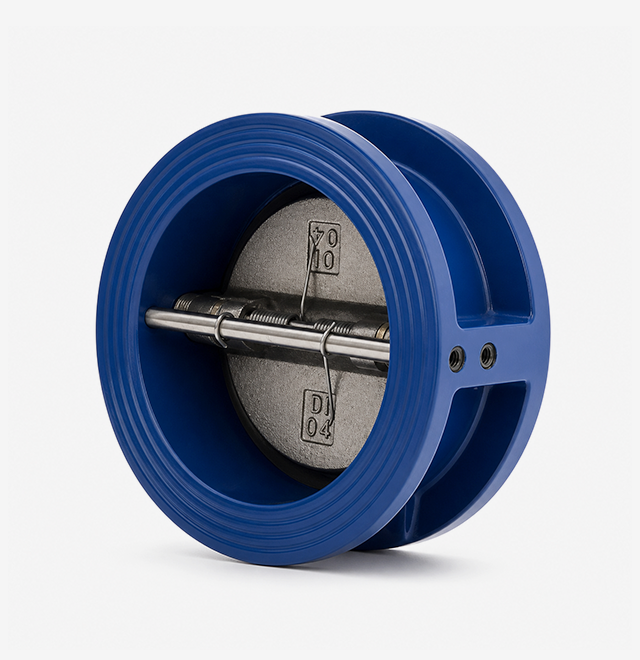
For water treatment, HVAC, and industrial piping projects, wafer butterfly valves are among the most practical options for on/off isolation. A typical DN150 (6-inch) valve may use a QT450 ductile iron body and an EPDM seat, with bubble-tight shutoff where the specification requires it and the valve is tested to the applicable standard. Its short face-to-face dimension makes it easier to install in space-limited lines than a gate valve. For distributors with regular replenishment needs, product consistency and correct material selection directly affect returns and customer satisfaction.
Understanding Wafer Butterfly Valves: Design, Function, and Advantages
What Is a Wafer Butterfly Valve?
A wafer butterfly valve is a quarter-turn rotary valve installed between two pipe flanges with long through-bolts. Unlike a lug valve, it does not have threaded inserts in the body and should not be used for end-of-line service unless the manufacturer permits it and a downstream blind flange is installed. Its face-to-face dimension is defined by the applicable dimensional standard, such as ISO 5752 or the EN 558 series. Design and testing may refer to API 609 or MSS SP-67, depending on the project and market.
Core Components and Materials
The working heart of any wafer butterfly valve is the disc-and-shaft assembly. The disc rotates 90° to open or close the flow path, pressing against a resilient seat to form a seal. Material selection matters at every point:
· Body: QT450 ductile iron for municipal water and HVAC, WCB carbon steel for high-pressure industrial lines, and CF8 (SS304) and CF8M (SS316) for mildly to moderately corrosive media
· Disc: ductile iron works in clean and neutral water; CF8M resists chlorinated and moderately acidic streams.
· Seat: EPDM is typical for water and air service, NBR for oil-contact, and PTFE for chemical and corrosive environments where rubber compounds deteriorate. Seat temperature restrictions vary per compound; see product info sheet.
· Shaft: Q235 for general use, 2Cr13 for improved corrosion resistance, and 304/316 stainless steel for demanding environments.
Key Operational Advantages
A wafer butterfly valve is not only compact; it is also practical to operate. Lever-operated DN50-DN150 valves are typically used for manual isolation in smaller lines. Gear-operated DN200-DN300 valves provide controlled operation at higher torque. Electric and pneumatic actuators can often be fitted through an ISO 5211 interface, provided that the mounting interface, stem, coupling, and actuator torque are matched to the valve in question.
Comparing Wafer Butterfly Valves with Alternative Valve Types
Wafer vs. Lug Butterfly Valve
A lug-type butterfly valve carries threaded inserts on both sides of the body, which allows it to serve as an end-of-line valve when the downstream pipework is removed. A wafer valve is not designed for that duty. Wafer bodies are lighter, less expensive per unit, and easier to hold in stock in large quantities, which is why they dominate replenishment catalogues for distributors who restock in volume.
Wafer Butterfly Valve vs. Gate Valve
When completely open, a gate valve provides a relatively unobstructed bore, which may be required by the project specification. In the DN150-DN300 range, gate valves are generally heavier and may cost more than wafer butterfly valves. Wafer butterfly valves rated PN10 or PN16 are often selected for on/off isolation in water and HVAC systems where the project accepts some pressure loss. Compare like-for-like quotations because size, pressure class, materials, and testing requirements affect the price difference.
Wafer Butterfly Valve vs. Ball Valve
Ball valves can provide true full-bore flow and tight shutoff, and they are often selected for higher-pressure service. From DN100 upward, they may be more costly and heavier than butterfly valves. An 8-inch DN200 wafer butterfly valve is generally lighter and more compact than a ball valve of the same nominal size. It may be suitable for large HVAC and water lines where the project does not require the same leakage performance as a full-bore ball valve.
|
Situation
|
Wafer butterfly valve
|
Consider instead
|
|
On/off isolation between two flanges, DN50–DN300, space limited
|
Well suited
|
—
|
|
End-of-line service with the downstream pipe removed
|
Not designed for this duty
|
Lug-type butterfly valve
|
|
Unobstructed full-bore flow required by specification
|
Disc restricts the bore
|
Gate valve
|
|
High pressure or a tight leakage class at DN100 and above
|
Less suitable
|
Ball valve, or a metal-seated design
|
|
Medium or temperature beyond the standard EPDM range
|
Requires a different seat
|
NBR or PTFE seat, confirmed against the data sheet
|
Wafer Butterfly Valve Configurations for Common Applications
Configurations, not rankings, determine the suitable option for a given line, medium, and duty. Match the configuration to confirmed application data to reduce seat-selection and shaft-fit errors that can cause field returns.
|
Configuration
|
Typical sizes
|
Typical service
|
Confirm before ordering
|
|
Lever-operated, QT450 / EPDM
|
DN50–DN100
|
Municipal water supply, HVAC
|
Lever detent positions and shaft fit
|
|
Gear-operated, QT450 / EPDM
|
DN150–DN200
|
Pump rooms, main distribution headers
|
Gearbox IP rating if mounted outdoors
|
|
Lever or gear, CF8M / PTFE
|
DN50–DN200
|
Wastewater, light chemical, food-adjacent lines
|
Chemical compatibility for the actual medium and concentration
|
|
Electric-actuated, ISO 5211 mount
|
DN50–DN300
|
Automated HVAC, water treatment plants
|
Actuator torque, fail-safe position, mounting interface
|
|
Pneumatic-actuated, NBR seat
|
DN50–DN300
|
Process piping with compressed air, rapid cycling
|
Air supply quality and cycle rate
|
|
OEM / private label, custom marking
|
DN50–DN300
|
Distributor brand programmes
|
Marking, labelling, colour coding, packaging specification
|
The key parameters are size (DN), pressure rating, medium and concentration, operating temperature, body and disc material, seat material, connection standard, operation method, and quantity.
Procurement Best Practices: How to Buy Wafer Butterfly Valves Online and Offline
Pricing Drivers and Lead Times
Price depends on body material, disc grade, seat compound, and actuator type. A DN100 QT450/EPDM lever valve costs considerably less than its CF8M/PTFE stainless counterpart. Stock items in standard configurations are normally despatched within one to two working days, subject to stock availability at the time of the order. Non-standard configurations — OEM marking, special materials, or custom packaging — usually take around seven to fifteen business days once the specifications have been confirmed.
Supplier Evaluation Criteria
A supplier that machines shafts in-house can verify shaft dimensions and tolerances before assembly.
Ordering Process
First confirm the key selection factors for the valve: size (DN), pressure rating, medium and concentration, operating temperature, body and disc material, seat material, connection standard, operation method, and quantity. Send them in one message so the manufacturer can prepare an accurate quotation. Then:
- ·approve a sample or a photograph;
- ·place a trial order at a quantity agreed with the supplier;
- ·confirm packaging and labelling requirements;
- ·release production;
- ·pack for export in wooden cases;
- ·ship.
Once the first batch has passed field review, monthly restocking orders usually follow.
Maintenance and Longevity: Ensuring Optimal Performance of Wafer Butterfly Valves
Routine Inspection Checklist
Make sure that the lever or gear operator can complete the full 90° stroke without binding. When the valve is closed at the specified pressure, check for any visible leakage.
Common Installation and Operating Mistakes
Common wafer butterfly valve problems include seat leakage and shaft binding. Incorrect seat material for the medium, hydrocarbon contamination, uneven flange bolt torque, flange misalignment, or incorrect shaft-to-disc tolerances can all contribute to these problems. Confirm the medium first, align the flange faces, tighten the bolts in the recommended sequence, and verify the shaft tolerances and disc-to-shaft fit before final assembly.
When to Replace vs. Repair
Repair may be possible if the body and disc are free from serious corrosion or deformation. If the body is deeply pitted, disc-edge wear prevents proper sealing, or the shaft is damaged during rotation, replace the valve as a complete unit. Service life depends on water quality, cycle frequency, seat material, and maintenance, so use a recorded inspection interval instead of promising a fixed service life.
Conclusion
Wafer butterfly valves in sizes from DN50 to DN300 are widely used for flow isolation in water treatment, HVAC, fire protection, and general industrial applications. For distributors purchasing directly from a manufacturer, the key checks are consistent seat compounds, confirmed shaft tolerances, a practical trial-order quantity, and reliable lead times. Choosing the body, disc, and seat materials for the approved application data helps reduce field failures.
FAQ
1. What information do I need to request a quotation?
Send the important selection variables in one message: size (DN), pressure rating, medium and concentration, operating temperature, body and disc material, seat material, connection standard, operation method, quantity. Once confirmed, a manufacturer may provide an exact estimate within one working day.
2. Which seat material should I choose for water service?
PTFE may be considered for chemical media or chlorinated water when compatibility data shows that EPDM is unsuitable. NBR may be suitable for oil-contact service. Always confirm the exact chemical, concentration, temperature, and pressure against the product data sheet.
3. What is the standard size range for a wafer butterfly valve?
The standard range discussed here is DN50 to DN300 at PN10 or PN16 and covers many distribution, HVAC, and water-treatment applications. Larger diameters or higher pressure classes should be specified separately with confirmed application data.
4. Is OEM or private-label service available?
Body marks, labels, colour coding, package design, and carton or wooden-case specifications may be tailored for each order. OEM service should be based on drawings, samples, or confirmed project requirements.
5. How do I prevent shaft binding after installation?
Shaft binding after installation is often caused by a dimensional mismatch between the shaft and disc bore or by flange misalignment during bolt-up. Choose a supplier that can verify dimensional tolerances before shipping. Align the flanges before tightening the bolts, and follow the recommended bolt-tightening sequence.
Request a Quote for Wafer Butterfly Valves from TZD
TZD (Tianjin Tangzheng Valve Co., Ltd.) manufactures wafer butterfly valves from DN50 to DN300 at PN10 or PN16, with QT450, WCB, CF8, or CF8M bodies. Shafts are machined in-house and trial-order quantities may be flexible. Send the confirmed application parameters for a quotation and technical review.
References
1. American Petroleum Institute. API Std 609: Butterfly Valves — Double-flanged, Lug- and Wafer-type, and Butt-welding Ends, 10th ed. API, 2026.
2. International Organization for Standardization. ISO 5211:2026: Industrial valves — Part-turn actuator attachments. ISO, 2026.
3. Manufacturers Standardization Society. MSS SP-67-2022: Butterfly Valves. MSS, 2022.
4. European Committee for Standardization. EN 593:2017: Industrial valves — Metallic butterfly valves for general purposes. CEN, 2017.
5. International Organization for Standardization. ISO 5752:2021: Metal valves for use in flanged pipe systems — Face-to-face and centre-to-face dimensions. ISO, 2021.
6. International Organization for Standardization. ISO 5208:2015: Industrial valves — Pressure testing of metallic valves. ISO, 2015.