A pneumatic wafer butterfly valve fits better when you need a light, compact, economical valve for standard in-line service between two flanges. A lug type fits better when you need to remove one side of the piping or run approved end-of-line service. Both designs can be automated with pneumatic actuators, so the decision rests on piping layout, maintenance access, pressure, temperature, media, and cost. At TZD, we build both styles, and this guide helps automation integrators, contractors, and OEM buyers compare them before they request a quote.
Projects often lose days when a valve arrives with the wrong connection style or an undersized actuator. The sections below cover design differences, specifications, media fit, selection steps, and supplier checks.

What Is a Pneumatic Wafer Butterfly Valve?
How the Valve Works
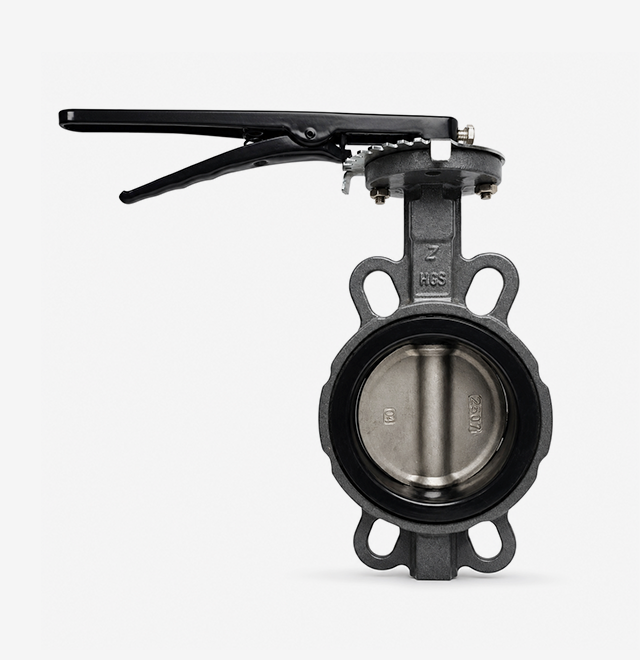
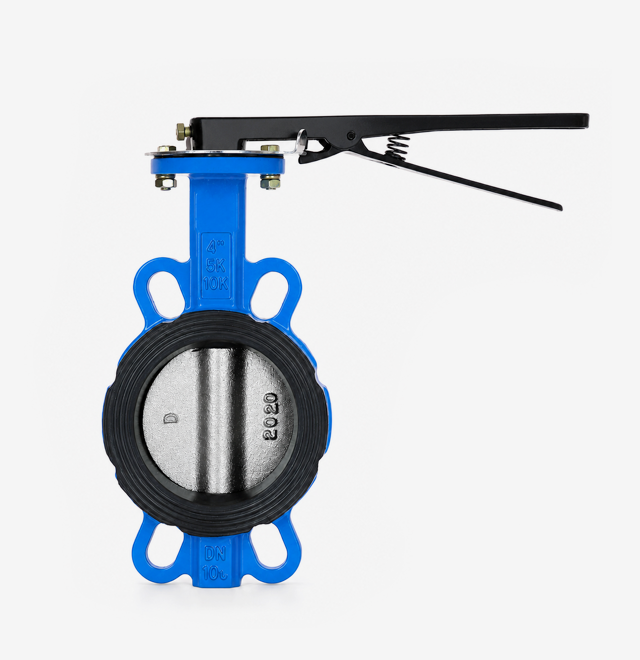
A pneumatic wafer butterfly valve is a quarter-turn valve that sits between two pipe flanges and runs on compressed air. A rack-and-pinion actuator converts air pressure into rotation, and the disc turns 90° to open or close the line. Long through-bolts hold the short wafer body between the flanges. That keeps the assembly light and compact in tight pipe racks and skid frames. Our TZD range covers DN50 to DN800 at PN10 and PN16, with a working temperature of 0 to 120°C. The ISO 5211 mounting pad lets the actuator bolt on directly, so you avoid adapter brackets and site machining.
Actuator Types and Fail Positions
The actuator decides how the valve behaves when air is lost. A double-acting actuator uses air to open and to close, so it normally holds its last position if the supply fails. A single-acting, spring-return actuator uses air in one direction and springs in the other, which gives a defined fail-open or fail-closed position. Process engineers usually set this from the interlock and emergency shut-off logic. Before we quote a pneumatic wafer butterfly valve, our team checks the air supply pressure, the actuation mode, the fail position, and the control interface. Those four answers drive the actuator size and the accessory list.
Typical Applications
Automation pays off where valves cycle often, sit far from the operator, or must close quickly. Our pneumatic wafer butterfly valve series serves water treatment and town water supply, HVAC systems, fire protection pipelines, industrial process piping, and sewage or wastewater lines. It also fits equipment skids, where an integrator wires solenoid valves, limit switches, and positioners into a PLC or DCS. The standard media list covers water, sewage, air, and neutral liquids. If your project involves rapid cycling or emergency shut-off, check torque, air supply, and fail position carefully before you choose a model.
Pneumatic Wafer Butterfly Valve vs Lug Type: Key Design Differences
Connection and Installation
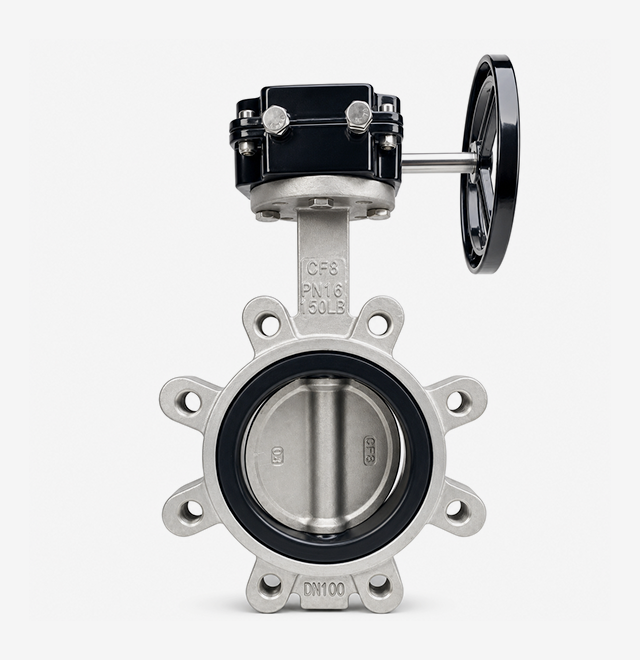
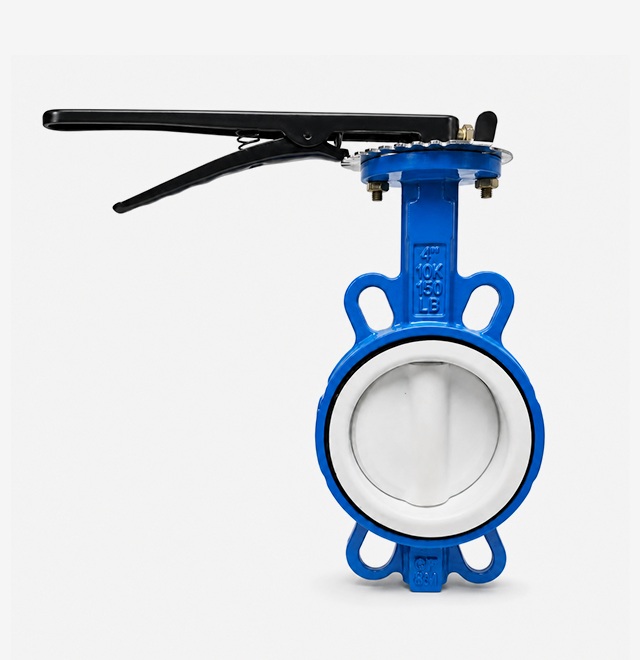
The main difference lies in how the body meets the pipe. A wafer body has no bolt holes of its own. It is centered between two flanges and clamped with long bolts that run the full length of the assembly. A lug body has tapped or threaded lugs around its perimeter, so each flange bolts to the valve with its own set of shorter bolts. Both styles follow standard face-to-face dimensions, such as EN 558 and ISO 5752, and API 609 covers wafer and lug butterfly valves together. Wafer is faster to set up in a straight run. Lug needs more bolts and more fastening time.
Maintenance Access and Dead-End Service
Maintenance is where lug construction earns its place. With a lug valve, you can unbolt one flange and keep the other side of the line in service, provided the layout and the manufacturer's rating allow it. With a wafer valve, removal normally means loosening the through-bolts and separating the pipe on both sides. Dead-end service, where the valve closes the end of a line with nothing downstream, needs extra care. Lug valves are often rated for it at a reduced pressure, while wafer valves usually are not. Because ratings differ by model, confirm any dead-end duty in writing with the supplier instead of assuming it.
Side-by-Side Comparison
The table below summarizes the typical differences. Treat it as a screening guide, and confirm final values against the manufacturer's data for each model.
| Factor |
Wafer |
Lug |
| Bolting |
Long through-bolts between flanges |
Separate bolts per flange |
| Weight and space |
Lighter, more compact |
Slightly heavier |
| Cost |
Generally lower |
Generally higher |
| Removal |
Pipe separation usually needed |
One side can often stay in service |
| Dead-end duty |
Usually not approved |
Often approved at reduced pressure |
| Typical use |
Standard in-line water, HVAC, air |
Maintenance-sensitive or end-of-line points |
For skid packages with accessible piping, the wafer style usually delivers the lowest installed cost. The lug premium pays back mainly at maintenance-sensitive points.
Technical Specifications and Media Suitability
Core Specifications for a Pneumatic Wafer Butterfly Valve
Start with the data that defines the valve. Our pneumatic wafer butterfly valve offers DN50 to DN800, PN10 or PN16, and 0 to 120°C. Bodies come in ductile iron (QT450), WCB, or stainless steel (CF8/SS304 and CF8M/SS316). Discs come in ductile iron, stainless steel, or aluminum bronze, and seats in EPDM, NBR, PTFE, or Viton. We make the shafts in-house, so we can check torque, shaft-end connection, and actuator fit together before delivery. Ask every supplier for face-to-face dimensions, pressure-temperature limits, and test documents. Also request operating torque, because actuator sizing must follow torque, air pressure, and safety margin, not nominal size alone.
Water, Air, and Gas Service
Seat material follows the medium. EPDM is the standard choice for water and air. NBR suits oil-based media, PTFE handles chemical or mildly corrosive lines, and Viton (FKM) covers higher heat or aggressive media. For compressed air, check leakage, response speed, and actuator air consumption. Gas service needs more caution. Hazardous-area requirements, fire-safe certification, leakage class, and fail position can all apply, and a standard pneumatic wafer butterfly valve is not automatically suitable for flammable media. Our listed media are water, sewage, air, and neutral liquids, so we ask buyers to confirm any gas duty and its documentation needs before quotation.
Pneumatic Wafer Butterfly Valve vs Pneumatic Ball Valve
Ball valves can give tighter shutoff and less flow obstruction in smaller, clean-fluid lines. Butterfly valves usually weigh less, cost less, and install more easily in larger water, HVAC, air, and utility pipes, which is why a pneumatic wafer butterfly valve is a common choice from DN50 upward. Check the required leakage class, pipe size, pressure, temperature, and available space before you decide. In a skid with limited headroom, the short wafer body saves room, and the lighter assembly puts less load on pipe supports. Where bubble-tight shutoff on a small, clean line is the priority, price a ball valve alongside it.
How to Select the Right Pneumatic Wafer Butterfly Valve
A Step-by-Step Selection Process
Work through the choice in order. First, define the medium, flow rate, pressure, temperature, pipe size, installation environment, and fail position. Second, match body, disc, shaft, and seat materials to corrosion, abrasion, and temperature. Third, decide between wafer and lug based on access and dead-end needs. Fourth, calculate the actuator from valve torque and your lowest available air pressure, then add a safety margin. Fifth, list the accessories: solenoid valve, limit switches, and positioner, with port sizes and signal types. For a pneumatic wafer butterfly valve, the ISO 5211 pad standardizes the actuator flange, so confirm that the pad size and drive dimensions match your actuator.
Common Selection Mistakes
Most field problems with a pneumatic wafer butterfly valve trace back to a few errors. Selecting by DN alone ignores pressure, temperature, media, and seat compatibility. An undersized actuator may fail to beat breakout torque and leave the disc part-closed. Skipping the air supply check means the actuator cannot reach its rated output. Mismatched solenoid ports or signal types cost days at commissioning. Misaligned flanges squeeze the seat unevenly and cause leakage after installation. Unverified dead-end duty, or choosing on initial price alone, adds risk and lifecycle cost. For slurry or dirty media, install the shaft horizontally so solids do not collect at the bottom bearing.
RFQ Information Checklist
A complete request for a pneumatic wafer butterfly valve shortens quotation time and cuts rework. Include valve type, size, pressure rating, flange standard, body, disc, and seat materials, medium, temperature, and leakage requirement. Add actuator function (single-acting or double-acting), fail position, air supply pressure, control voltage, accessories, quantity, destination, and any certification or documentation needs. Tell us whether you want the valve, actuator, solenoid valve, and limit switches delivered together. Our stock models can leave the same day or the next day when the order qualifies, and customized builds normally take 7 to 15 business days. Share drawings or samples for OEM and ODM work.
Supplier Evaluation and Final Decision
What to Check in a Supplier?
Match the supplier's capability to your project. Ask about machining and testing capacity, pressure and sealing tests, inspection records, export packing, OEM customization, spare parts, and warranty for pneumatic wafer butterfly valve products. TZD runs a 2,000-square-meter site with 60 employees and covers machining, assembly, inspection, testing, and packing. Manufacturing began in 1998, the current company was established in 2006, and the range spans more than 50 valve models and 600 specifications. We offer a 12-month warranty, subject to the terms of the quotation or contract, and answer technical questions within one hour during business hours. Request documents that match the exact model you order.
When to Choose a Pneumatic Wafer Butterfly Valve?
Choose the wafer style for standard in-line service where compact size, low weight, and installed cost matter most. Water treatment plants, HVAC loops, fire protection pipelines, and automated skids with accessible piping fit this profile. A wafer body also loads pipe supports less than a heavier lug body. Pair it with a double-acting actuator for simple on/off cycling, or a spring-return actuator when the interlock demands a defined fail position. The ISO 5211 pad accepts solenoid valves, positioners, and limit switches without adapters, which keeps site work to air and signal connections.
When to Choose Lug Construction?
Choose the lug style when maintenance flexibility outweighs the extra weight and cost. Examples include end-of-line points that require approved dead-end service, equipment that must be isolated while the downstream line stays in service, and sections that need frequent servicing. Confirm the dead-end pressure rating in writing, since it is often lower than the full line rating. Lug and wafer versions share the same actuator logic, so the torque calculation, air supply check, and fail-position decision stay the same. Neither design is better in every case. We build lug butterfly valves too, so we can quote both and let your layout decide.
Conclusion
A pneumatic wafer butterfly valve suits standard in-line service where compact size, low weight, and lower cost matter, while a lug valve suits points that need one-sided removal or approved dead-end duty. The two designs share the same quarter-turn operation and actuator logic, so the actuator decision rests on valve torque, lowest available air pressure, fail position, and a safety margin. Media and seat compatibility matter as much as connection style, and gas or flammable service needs project-specific verification. Mistakes such as selecting by DN alone, skipping the air supply check, or assuming dead-end ratings add cost on site. Complete operating data, matched documentation, and a supplier that checks the full valve and actuator package lead to the right choice.
FAQ
1. Can a wafer valve handle dead-end service?
Usually not. Many wafer designs are not approved for dead-end duty, while lug valves often are, at a reduced pressure rating. Ratings differ by model, so verify yours in writing before installation.
2. How do I size the actuator for a pneumatic wafer butterfly valve?
Start with the valve's operating torque. Then check the lowest air supply pressure, actuator type, and fail position. The actuator output must exceed breakout torque with a safety margin.
3. Which seat material should I choose?
EPDM suits water and air. NBR suits oil-based media, PTFE suits chemical or mildly corrosive lines, and Viton suits higher heat or aggressive media. Confirm your choice against the medium and temperature.
Request a Pneumatic Wafer Butterfly Valve Quote from TZD
Send TZD your valve size, medium, pressure, temperature, flange standard, actuator function, fail position, quantity, and delivery date, and our team will recommend a wafer or lug configuration. As a pneumatic wafer butterfly valve manufacturer and supplier, we support actuator matching, material selection, OEM and ODM requests, and trial orders. Email youweipan21@gmail.com for datasheets and a complete valve-and-actuator quotation.

References
1. API Standard 609: Butterfly Valves: Double-Flanged, Lug- and Wafer-Type, 2021
2. ISO 5211: Industrial Valves – Part-Turn Actuator Attachments, 2017
3. EN 593: Industrial Valves – Metallic Butterfly Valves, 2017
4. EN 558: Industrial Valves – Face-to-Face and Centre-to-Face Dimensions of Metal Valves for Use in Flanged Pipe Systems, 2017
5. ISO 5752: Metal Valves for Use in Flanged Pipe Systems – Face-to-Face and Centre-to-Face Dimensions, 1982
6. Emerson, Control Valve Handbook (Fifth Edition), 2017