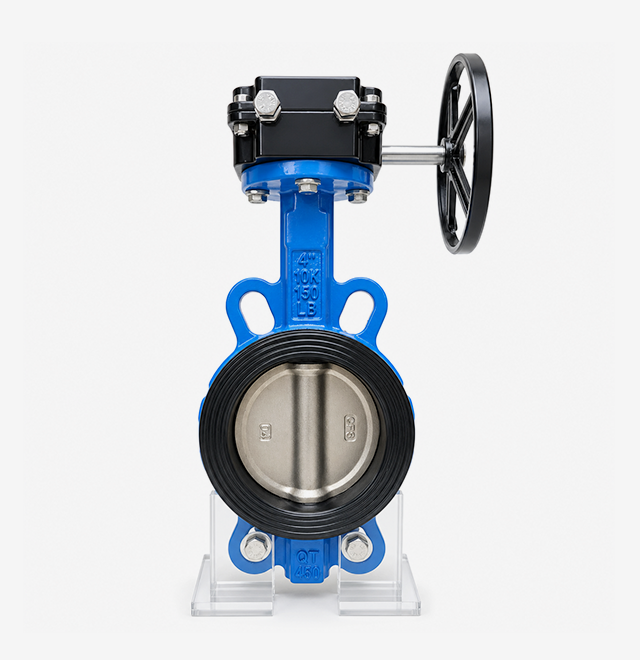
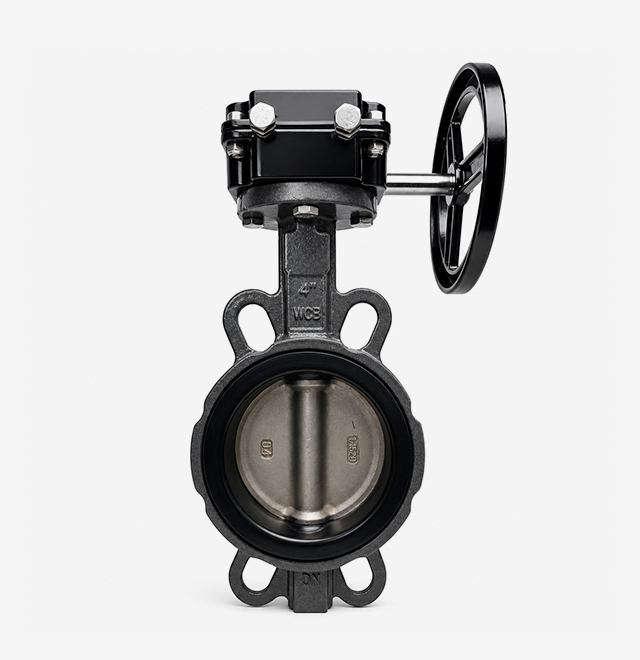
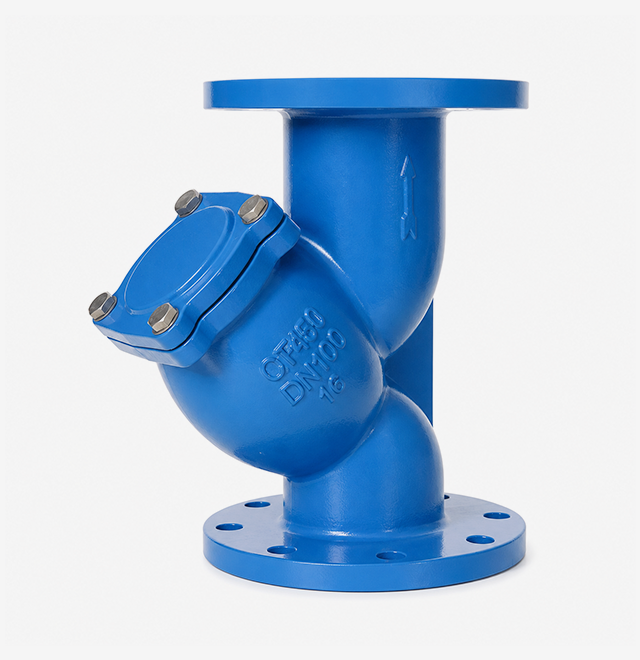
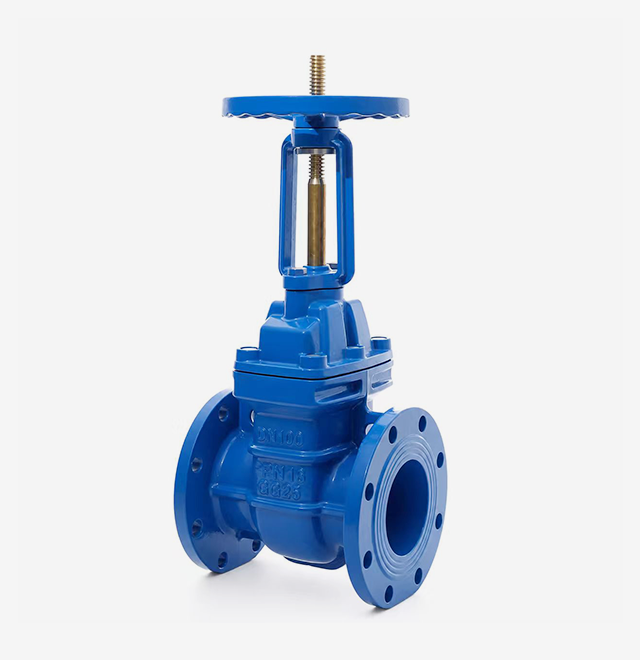
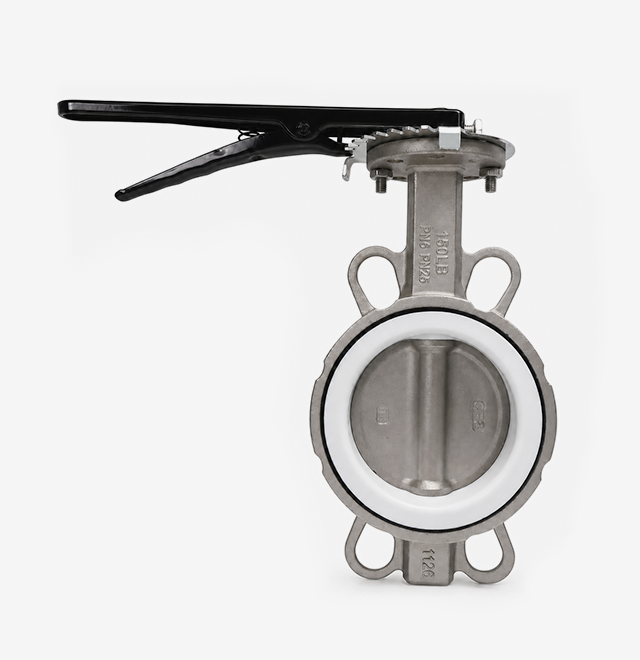
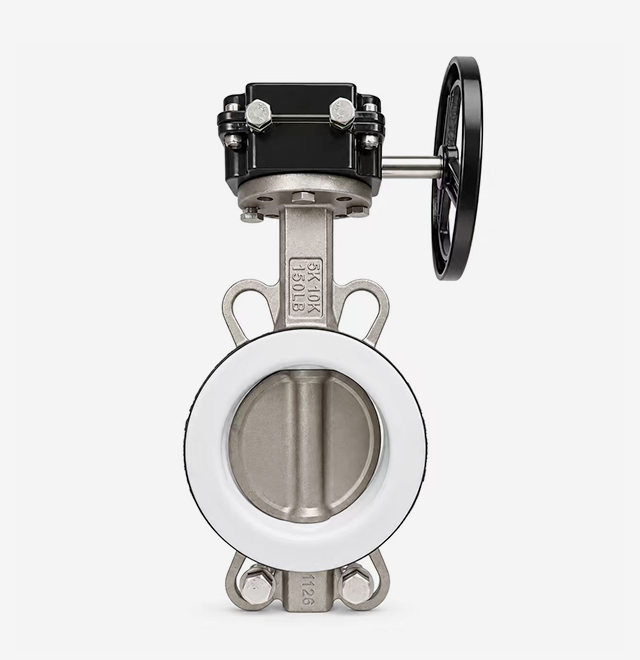
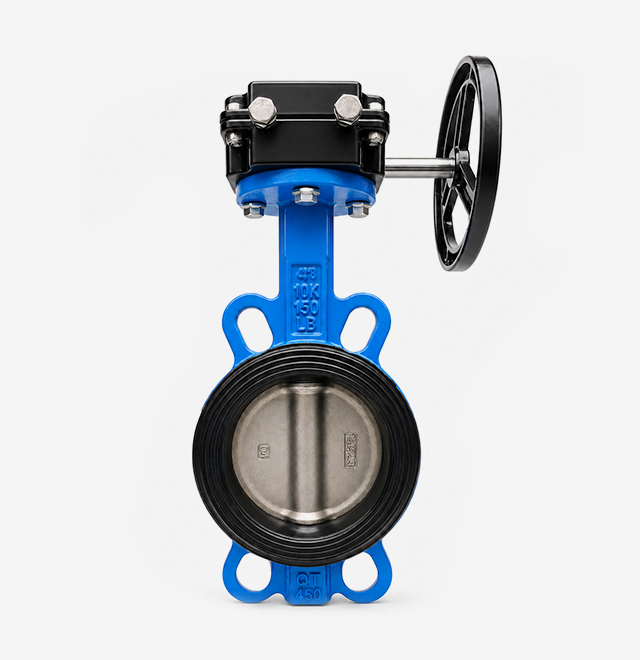
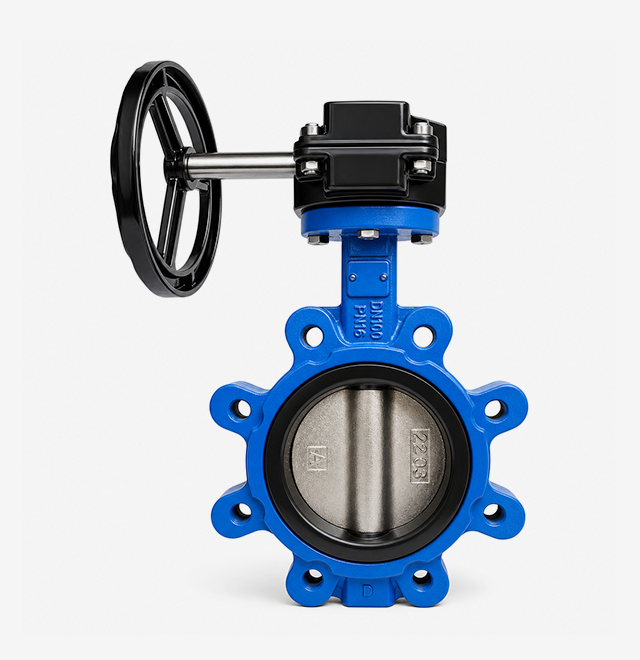
For a ductile iron wafer butterfly valve, it’s only as good as its wetted parts for the task. A QT450 ductile iron body, coated ductile iron or stainless steel disk and EPDM seat may be suited for various water and HVAC lines. For other media, only once compatibility has been proven may NBR, PTFE, FKM or stainless-steel parts be considered. At TZD we make this valve in DN50-DN300 with PN10/PN16 ratings subject to model confirmation. Below we describe each alternative, how to check the material quality and when a cheap error becomes an expensive return.

Body Materials for a Ductile Iron Wafer Butterfly Valve
Why QT450 Is the Standard Body Grade?
The body bears major loads and maintains the seat in position, therefore its material is the first thing that concerns. Our typical ductile iron wafer butterfly valve is made from the QT450 body. The QT450-10 has a minimum tensile strength of 450 MPa and an elongation of 10% according to GB/T 1348. ASTM A536 65-45-12 is a different material designation with different minimum tensile strength, yield strength and elongation criteria and should not be assumed to be the same as QT450-10 until the corresponding standard is confirmed. Gray cast iron contains graphite flakes that can act as crack initiators, while ductile iron contains substantially spheroidal graphite. This difference normally offers ductile iron more ductility and toughness than gray iron, although the valve grade and design must still be checked for water hammer, pipe stress, and installation stresses.
Alternative Bodies: WCB, CF8 and CF8M
Some lines demand more than ductile iron can offer. We also offer bodies in WCB, CF8 and CF8M subject to confirmation of model. WCB is cast carbon steel and may be suitable for certain steel pipe systems and greater mechanical stresses. CF8 cast is generally regarded the cast equivalent of 304 stainless steel. CF8M is often thought of as the cast equivalent of the 316 type of stainless steel and its molybdenum content may provide further resistance to certain chloride and pitting situations. These grades are more costly than ductile iron. For potable water, chilled water and fire pump lines, ductile iron can be more cost effective if the coating, pressure rating and approvals are appropriate.
How to Verify the Grade Before You Pay?
Some buyers are worried that a supplier might send gray iron that’s labeled as ductile iron. A written cheque takes that uncertainty away. QT450-10 and ASTM A536 65-45-12 are not interchangeable materials. Ask the estimate to specify the specific material grade and standard. Ask for the relevant material certificate, chemical composition records and mechanical test data for the batch. A competent laboratory or PMI program may do further verification after items are received, but a portable analyzer is not a replacement for the material certificate or batch records. Please state your document needs at inquiry and we will confirm the papers we can provide for your order. A ductile iron wafer butterfly valve with a designated grade and verifiable records is so much simpler to defend with your own customers.
Disc Material Options for a Ductile Iron Wafer Butterfly Valve
Ductile Iron Discs for General Water Service
The disk rotates on the shaft and is in the flow path, so it interacts with every particle that the pipe transports. Ductile iron disks are cheaper than stainless steel and may be good for clean low corrosion water when the coating and pressure rating is appropriate. Where required we additionally provide a rubber covered disk which prevents direct contact between metal and medium and may assist sealing in general water service. Check disk concentricity and sealing fit in accordance with the established manufacturing and inspection plan. Depending on the materials and certifications used this design may span many water based markets for importers and distributors.
Stainless Steel and Aluminum Bronze Discs
If water has chlorides in it, and you have picked chemicals or other media attacking iron, choose CF8 or CF8M disks. In certain chloride or brackish water environments, CF8M may be better than CF8, however the decision relies on concentration, temperature, flow and crevice conditions. Aluminum bronze disks may be used for some seawater service applications if the compatibility is reviewed. Stainless disks are more expensive and tie up more money in stock thus I recommend them when the media or project requirement demands them. A mixed order may do well: ductile iron disks for the main volume and stainless units for more severe lines. Send us the medium and operating details and we will validate the disk before pricing.
Disc Accuracy and Shaft Connection
Disk performance is not just determined by material. The edge precision, surface polish and concentricity determine how uniformly the disk sits. An off-center disk wears one side of the seat first and increases operating torque. For provided valves the shaft diameter, tolerances, shaft ends, the disc-to-shaft connection and assembly torque should be tested according to the approved manufacturing and inspection plan. Shaft choices may include Q235, 2Cr13, 304, 316 depending on model confirmation. Checking these parts together may minimize jams, uneven wear and insecure sealing. For corrosive media, request a shaft material suitable with the disk and medium. If somebody says that shafts have been supplied to other manufacturers then it must be backed by business documents that can be verified before it is utilized for public marketing.
Seat Materials: Where Shutoff Is Won or Lost
EPDM for Water, Sewage and HVAC
The seat is the seal between disk and body and hence determines leakage performance, torque and temperature restrictions. EPDM is a common material for suitable water and sewage service and has good weather and ozone resistance which is useful for outdoor piping. It’s permitted temperature range is based on the compound, pressure, medium and continuous duty requirements. 0-120°C is not a universal rating. EPDM may be swelled or softened by petroleum oils and hydrocarbons . However the appropriateness limit is determined on the oil, concentration, temperature and exposure period. If the datasheet says it is compatible, EPDM may be a cost effective seat for chilled and hot water loops, treated water and municipal lines.
NBR, PTFE and FKM for Special Media
NBR may be suitable for some oils, fuels and petroleum-based media, but compatibility must be tested for the particular fluid, concentration, temperature and exposure. It could be subject to degradation from sunshine and ozone quicker than EPDM, and hence might need protection in exposed outdoor service. PTFE is chemically resistant to various chemicals and has a low friction but is not universal to all chemical service. It is stiffer than rubber thus the valve design and operating torque have to be compatible with it. FKM, commonly known as Viton® when available, is suitable for certain high temperature and chemical service. The range 0-120 °C is material and model dependent. If your process is hotter or involves harsh chemicals please provide complete operational data before purchasing.
Seat Life in Outdoor and Abrasive Service
Sunlight and abrasive water are two factors that will wear down seats quicker. Sunlight and ozone degrade rubber, therefore EPDM is better for outdoor usage than NBR. Water containing sand or grit will erode the seat and disk edge. A seat that is worn is often replaced rather than repaired in the field. Without test data I will not offer a service life in years. We do not. We consider slurry and sandy-water service on a case-by-case basis. Send particle size, solids concentration, flow velocity, pressure and temperature and we will advise whether an abrasion resistant structure is required. Keep extra chairs on the shelf for such queues. We can provide the original spare parts.
Matching Material Combinations to Your Application
Water Supply, Treatment and HVAC
Where the materials are suitable, a QT450 body, coated ductile iron disk and EPDM seat are a frequent combination for water supply, treatment facilities and chilled or hot water loops. This ductile iron wafer butterfly valve fits between two flanges with through bolts, and may conserve footprint area in plant rooms and risers. For U.S. potable-water projects, verify that the specification calls for NSF/ANSI/CAN 61 certification for the specified valve, wetted materials, and configuration. Not every default configuration fulfills that criteria First check with us on the seat compound for treated water or glycols in HVAC loops.
Fire Protection and Industrial Pipelines
Fire pump systems subject valves to abrupt pressure, making both body strength and seat integrity important. Many fire initiatives have special listing or approval requirements. Fire certifications are only valid for the holder, model and extent indicated on the original. Just let us know the listing you require and we will verify with the model and quote you. Ductile iron wafer butterfly valve is applicable for water, sewage, air, and neutral liquids in industrial pipelines. For corrosive or abrasive media a material evaluation must be done beforehand. A conventional wafer valve should not be applied at a dead end, unless a documented end-of-line rating is provided by the manufacturer for that exact size and pressure. If the service is dead-end, use a lug-type butterfly valve or other design suitable for that scenario.
Wafer, Lug or Flanged: Choosing the Valve Type
Wafer valves are tight-fitting, lighter, and cost less than lug or flanged kinds. Lug types include threaded inserts that enable installers to remove one side of the pipe while the other side remains pressurized, thereby allowing dead end service. Flanged designs are good for bigger lines or projects that need their own flange connections. Butterfly valves are lighter than gate valves and spin a quarter of an inch, enabling personnel to open and shut them more rapidly. Ball valves may be fitted in tiny lines or for particular process purposes. We provide wafer, lug, flanged, double-flanged and grooved butterfly valve designs, so you may evaluate any ductile iron wafer butterfly valve option with one query.
Ordering a Ductile Iron Wafer Butterfly Valve from TZD
Specifications We Quote Against
A clean inquiry gets quoted more quickly. Our stated range of ductile iron wafer butterfly valves are DN50-DN300 in wafer connection, PN10, PN16 nominal pressure ratings. The acceptable temperature range varies on the body, seat, media, pressure and model datasheet. Do not use 0~120°C as a working range for all. Model dependent, the unit may be operated by handle, gear, electric or pneumatic actuator. On suitable models the actuator mounting pad and coupler may be fitted to the appropriate ISO 5211 dimensions; check the interface in the figure. Please check the drilling of your mating flanges. The drilling of PN and US Class 125 may be different. We validate size, pressure rating, medium, temperature, connection standard and quantity before quotation.
Trial Orders, Mixed Sizes and Lead Time
We may discuss factory-direct supply. MOQ might be different by size, material and manufacturing plan, therefore trial orders are subject to confirmation. Kindly advise us on the sizes required such as DN50, DN80, DN100 and DN150 and we will advise the minimum for each size and how they may be combined in one shipping. Standard models in stock may leave same day or next day. Standard customized items usually take 7-15 business days, depending on specification, inspection, manufacturing and logistics. Our factory is located jinnan district, tianjin. We accept the payment and shipping conditions in the quote.
Documents, Testing and Warranty
According to the approved inspection plan and the relevant standard, shell pressure testing and seat leakage testing may be given. Quality control might also involve incoming material, machining, assembly, final inspection and packaging. Please list the papers you want at the time of request (material certifications, test records etc). We will clarify what can be delivered with the order. If necessary, export packaging may be done in wooden boxes. Warranty conditions and duration as per final quotation/contract. Our staff will try to address technical questions within one business hour during business hours, and remote video instruction is dependent on the availability of technical support.
Conclusion
The choice of materials determines the length of time a ductile iron wafer butterfly valve will seal, spin freely and resist corrosion. QT450 Ductile iron is a popular body material and its spheroidal graphite normally offers better ductility and toughness than gray iron. The correct grade should be shown on the quote and material certificate. Disk possibilities include coated ductile iron for suitable clean water to CF8M or aluminum bronze for chosen corrosive media. The media restrictions are determined by the seat: EPDM for suitable water, NBR for chosen oils, PTFE for selected chemicals and FKM for certain services. Application, flange standard, pressure-temperature data and certification demands then restrict the combination. Unless you have a documented end-of-line rating verifying the situation, you should not utilize a typical wafer valve for dead-end service; a lug-type valve is usually the safest place to start.
FAQ
1. Which seat material suits water service?
EPDM may suit compatible water, sewage, and HVAC loops, and it resists weather and ozone. Its temperature limit must come from the selected seat compound, pressure, medium, and datasheet rather than a universal 0–120°C statement. NBR may suit selected oils, while PTFE or FKM may suit selected chemical services after compatibility confirmation.
2. How do I confirm the body is ductile iron and not gray iron?
Ask the quotation to state the exact material grade and standard. QT450-10 and ASTM A536 65-45-12 are different designations and should not be treated as interchangeable without verification. Request the material certificate, chemical-composition records, and mechanical test data for your batch. A qualified local laboratory may also test a sample after delivery.
3. Can a wafer valve serve at the end of a line?
Not normally. A standard wafer valve is generally not recommended for dead-end service unless the manufacturer provides a written end-of-line rating for the specific size, pressure, and installation condition. Use a lug-type butterfly valve or another design rated for that service.
4. Does TZD accept OEM orders?
Yes. Send drawings, samples, or project specifications. We match materials, dimensions, actuation, coatings, marking, and private-label packing.
Request a Ductile Iron Wafer Butterfly Valve Quotation from TZD
Send TZD your sizes, medium, temperature, pressure, flange standard, and quantity. We aim to reply within one business hour during business hours. As a ductile iron wafer butterfly valve manufacturer offering OEM/ODM support and trial orders, we can quote the material combination supported by the confirmed specification. MOQ, pricing, delivery, and warranty terms are subject to the final quotation or contract. Email youweipan21@gmail.com for details.

References
1. ASTM International, ASTM A536-84 Standard Specification for Ductile Iron Castings, 2019
2. European Committee for Standardization, EN 593 Industrial Valves – Metallic Butterfly Valves, 2017
3. International Organization for Standardization, ISO 5211 Industrial Valves – Part-Turn Actuator Attachments, 2017
4. NSF International, NSF/ANSI/CAN 61 Drinking Water System Components – Health Effects, 2023
5. Parker Hannifin, Parker O-Ring Handbook, 2021
6. Peter Smith and R. W. Zappe, Valve Selection Handbook, 2004