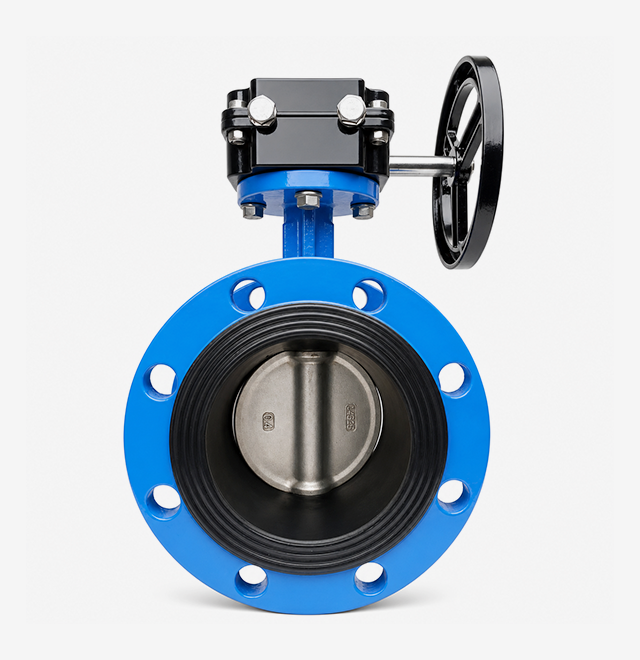
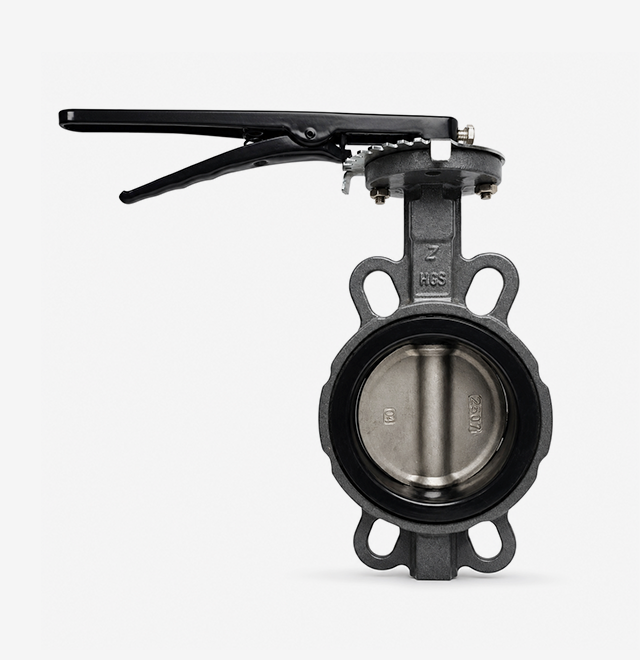
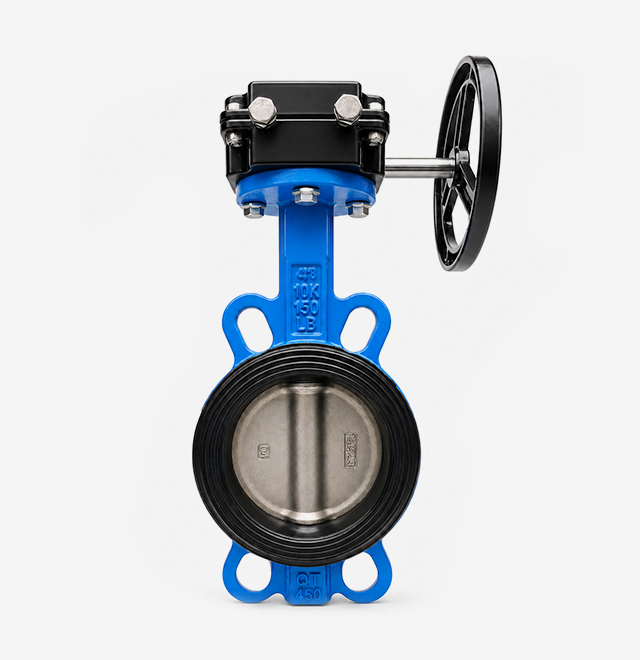
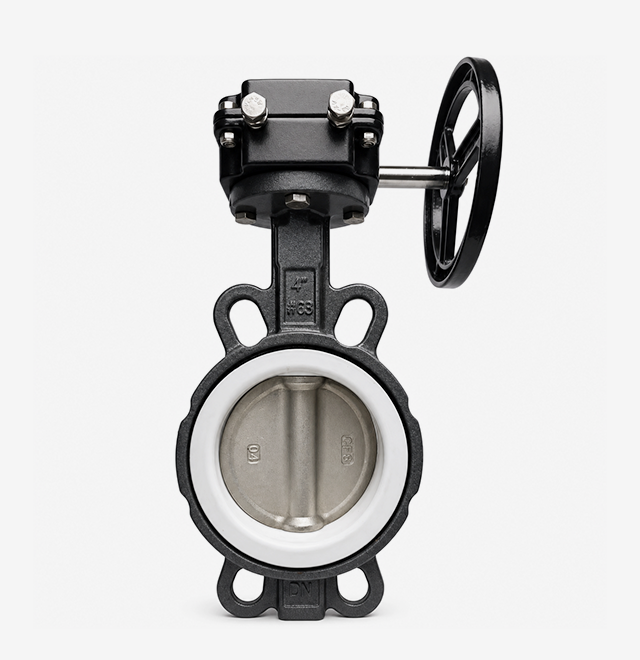
A ductile iron wafer butterfly valve is a tiny quarter-turn valve that isolates or regulates flow by clamping between two pipe flanges. Depending on the grade of material and valve design, its ductile iron body, when made to a certain grade, usually provides more resistance to impact and hydraulic shock than gray iron. This makes it a feasible solution for water treatment, HVAC, fire prevention, and industrial pipes. Match size, pressure rating, service temperature, seat material and operation to your application and pick the proper one. Then, before ordering, verify the flange drilling, pressure-temperature data and material papers.

What Is a Ductile Iron Wafer Butterfly Valve?
Definition and Basic Function
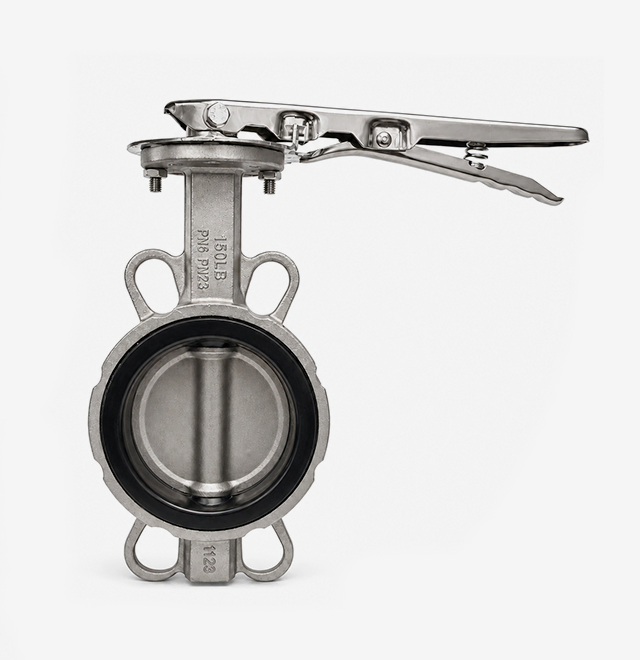
At TZD we characterize the wafer butterfly valve by its working part: a disk on a central shaft . The disk will turn 90 degrees from fully open to fully closed . Any where in between the two throttles flow . The body is sandwiched between two pipe flanges and held there by through-bolts so the valve does not require flange faces of its own. This helps keep weight and face-to-face length low, which is an advantage in tight mechanical rooms and crowded pipe racks. Our ductile iron wafer butterfly valve range includes DN50 to DN300, about 2 to 12 inches, with PN10 & PN16 nominal ratings. At reference circumstances, these designations equate roughly to 145 and 232 psi, respectively . These are not universal allowed pressures at all temperatures, or for all materials.Check the pressure temperature chart for the chosen model.
Why Ductile Iron Instead of Gray Iron?
Gray iron contains flakes of graphite, and the flakes cause fractures to form under stress. Ductile iron has nodular graphite, causing the fractures to be blunt and the metal to extend before it breaks. The ASTM A536 grade 65-45-12 has minimum tensile strength of 65 ksi, minimum yield strength of 45 ksi and minimum elongation of 12 percent. QT450-10 is another material designation and should not be compared with ASTM A536 65-45-12 without verifying the appropriate standards and test data. Specified ductile iron grades usually give superior fracture resistance and ductility than gray iron. This is an important consideration in pumped systems where a pressure spike might occur from a pump trip or quick closure.Write the precise grade and standard on your purchase order and ask for material and batch records.
Limits of a Ductile Iron Wafer Butterfly Valve
Gray iron keeps its graphite as flakes, and flakes initiate fractures under stress. Ductile iron has nodular graphite, causing the fractures to be blunt and the metal to extend before it breaks. The ASTM A536 grade 65-45-12 has minimum tensile strength of 65 ksi, minimum yield strength of 45 ksi and minimum elongation of 12 percent. QT450-10 is another material designation and should not be compared with ASTM A536 65-45-12 without verifying the appropriate standards and test data. Generally, ductile iron grades have superior fracture resistance and ductility than gray iron, which is significant in pumped systems where a pump trip or quick closure might induce a pressure spike.Ask for material and batch records, and write the exact grade and standard on your purchase order.
Ductile Iron Wafer Butterfly Valve Design and Structure
Core Components and Operating Principle
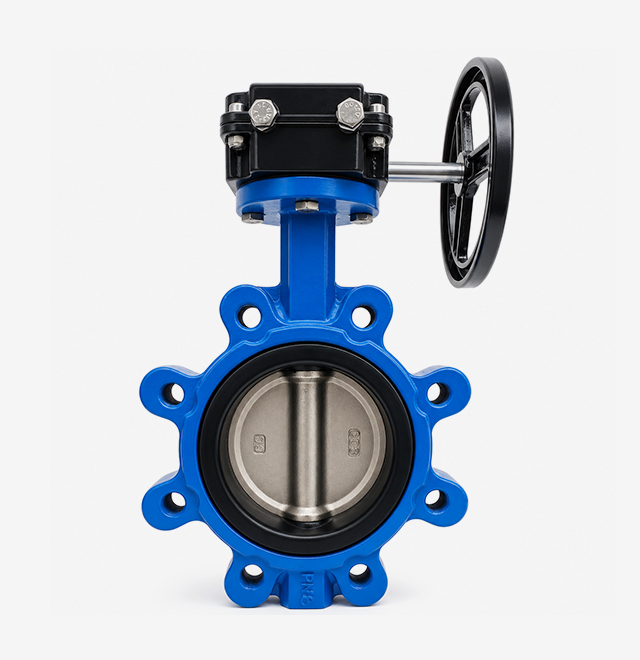
The main parts are the ductile iron body, disc, shaft, resilient seat, bearings, stem seals, and handle or actuator. If a coated disk is chosen, the coating may prevent direct metal contact with the medium and may be suitable for normal water service and slightly corrosive water. For provided valves examine shaft diameter, tolerances, shaft ends, disk to shaft connection and assembly torque as per approved inspection plan. Inspecting them at the same time reduces the chances of jamming, uneven wear and unsteady sealing. The manufacturing and inspection method should include check the disk concentricity and sealing fit. If the valve is equipped with the appropriate position indication, the open and closed states may be seen at a glance on the lever handle.
Connection Method and Operation Options
The install relies on the flange alignment. The valve is sandwiched between two flanges, therefore bolt hole design, face-to-face dimension and pipe support all count. In your initial query, please tell us the flange standard, drilling with PN10/PN16 or drilling with ANSI Class 125/150, and we will check it before pricing. For operation, pick a handle for small and medium sizes, a worm gear for bigger sizes for simpler turning, or an electric or pneumatic actuator for remote control. For suitable models, the actuator mounting pad and connection may be made to meet the required ISO 5211 parameters. See product drawing to verify flange size, coupling and bolt pattern. Specify torque margin and fail position for automated service. Operation type is model dependent and should be checked before placing order.
Technical Specifications at a Glance
The main parameters of our ductile iron wafer butterfly valve are listed below. The connection is wafer, stated size range is DN50 to DN300 and nominal pressure ratings are PN10 and PN16 subject to model confirmation. Bodies may be QT450 ductile iron, WCB, CF8 or CF8M depending on the model. Disks can be ductile iron, stainless steel or aluminum bronze. Seats can be EPDM, NBR, PTFE or FKM (Viton® where appropriate). Shafts can be Q235, 2Cr13, 304 or 316. The precise materials and pressure-temperature chart are depending on the compatibility of media and temperature restrictions. A nominal pressure rating is not the same as allowed pressure at temperature; thus, ask for derating data for higher temperature usage. Request drawings, certifications and test data before placing final purchase.
Ductile Iron Wafer Butterfly Valve Applications and Comparisons
Water, Wastewater, and HVAC Service
When the body, coating, disk and seat are suited to the service, a ductile iron wafer butterfly valve may offer shut-off and flow control in municipal and industrial water pipes. For chilled-water and heating-water loops, the small body could be useful when the installation area is restricted. For potable water in the United States, check NSF/ANSI/CAN 61 certification or other project-required compliance for the exact valve type, materials, size, and water-contact configuration; a product description does not indicate certification. This valve may also be used on clean-water irrigation lines, although sand might damage seats over time. So let us know the sediment level before you purchase. EPDM is commonly utilized for suitable water and sewage service depending on temperature and chemical.
Fire Protection and Industrial Pipelines
In fire pump systems, the valve should be pressure rated and the body and trim used shall be suitable for the pressure and service circumstances. US fire-water projects may need UL or FM rated valves. A listing is for a certain manufacturer, model, size range and scope only. Before defining any valve for fire service, verify specific listing and authority criteria. It is suitable for neutral liquids and air in industrial pipework. NBR, PTFE or FKM with certain oils, hydrocarbons or chemicals, however compatibility must be verified for the particular medium, concentration, temperature and pressure. Send us the medium, temperature and pressure and we will check the match.
Comparison With Other Valve Types
A wafer valve is frequently smaller and less expensive than a lug-type butterfly valve although the actual cost and weight depend on the size, materials, rating and design. Unless a stated rating for dead-end service or one-sided removal is provided by the manufacturer, a common wafer valve should not be considered acceptable for such duty. Butterfly valves shut with a quarter turn and are often lighter and take up less space than gate valves, but the disk stays in the flow. Gray iron is usually not as ductile as ductile iron. But the actual performance varies on the grade and design. Soft seated designs are well suited for many water and HVAC applications, whereas metal seated versions may be used for higher temperatures or abrasive media if they are designed expressly for them. The primary benefits are small size, low weight, rapid operation and material flexibility. The negatives include pressure loss, restrictions of the seat and sensitivity to misalignment.
How to Choose, Install, and Maintain a Ductile Iron Wafer Butterfly Valve?
Define the Operating Scenario First
Start with medium, pressure, temperature, flow rate and permissible pressure drop. Then determine whether the valve is isolating, throttling or turned off in an emergency and the frequency of cycling. Before quoting we validate 6 criteria, size, pressure rating, medium, temperature, connection standard and quantity. Those six prevent most mismatches. Choose body, disk, shaft and seat independently, beginning with ductile iron for ordinary water, to stainless steel where corrosion dictates. For automated servicing check breakaway torque, seating Torque, actuator safety margin, control signal and fail position. Finally, write the standards, papers and any private-label labeling into your ductile iron wafer butterfly valve specification.
Installation and Commissioning
Check the valve. Check nameplate. Check flange compatibility. Debris cuts the seat . Clean weld slag and debris from pipe . Do not drag the pipe into position with the valve, but maintain the disk slightly open while inserting so the seat edge remains protected, and align the flanges. Tighten bolts in cross pattern. Then cycle the handle or actuator through full travel before pressurizing the line and verify that the disk slides freely, without contacting the pipe bore.
Maintenance and Troubleshooting
Routine rounds should include checking the stem and seat for leaks. Cycle valves on a timetable established by your site to prevent the seat from sticking to the disk. Check gearboxes and actuators and replace any broken parts with authentic replacement parts only. If a valve is leaking, the following should be checked in order: alignment, trapped debris, torque settings, stem seals and flange condition. Our staff provides remote video support for installation and troubleshooting. Technical issues are answered within 1 hour during business hours.
Ductile Iron Wafer Butterfly Valve Procurement and Supplier Evaluation
What a Strong Quotation Contains?
The unit price alone doesn't tell you your landed cost. Pressure rating, materials, seat, actuation, coatings, testing, packaging, quantity and delivery location affect pricing. Request each provider of a ductile iron wafer butterfly valve to quote size, grade, seat, flange standard, and packaging on the same quotation so you can compare line by line. Quote attachment - the specific material designation and standard. QT450-10 and ASTM A536 65-45-12 are separate specifications and should not be presented as interchangeable until the requisite equivalence has been proven. Ask for the necessary material certificate and chemical-composition or inspection data. Please advise the minimum order per size, a flexible MOQ is difficult to quote unless each size is numbered. On that premise, mixed size trial orders like DN50, DN80, DN100 and DN150 combined may be straightforward to talk about.
A Selection Checklist for B2B Buyers
Here is a short checklist I suggest you run before every purchase order.
- Technical review: Confirm the size, pressure rating, temperature, medium, seat and disc materials, flange standard, face-to-face dimension, and operating mode. For automated valves, add actuator torque and installation clearance. Check each item against the datasheet, not the product title, so the quote and the drawing describe the same valve.
- Compliance review: Request the material grade and chemical composition, pressure and seat leakage test records, coating information, and any approvals your project requires, such as NSF/ANSI 61 for potable water or UL/FM for fire service. Confirm that each certificate names the exact manufacturer, model, and scope, and that it remains valid.
- Commercial review: Verify quantities per size, lead time, export packaging, documents, Incoterms, payment terms, quotation validity, warranty, and OEM or private-label requirements. Our customized orders typically require 7 to 15 business days, and qualifying in-stock standard models may ship the same day or the next day, subject to order confirmation, production status, inspection, and logistics.
Running these three reviews up front shortens clarification rounds and keeps supplier comparisons consistent.
How to Evaluate a Valve Supplier?
A good supplier shows manufacturing control, not just a price. Tianjin Tangzheng Valve Co., Ltd. has made valves since 1998, and the current company has operated since 2006. Our site in Tianjin supports machining, assembly, inspection, testing, warehousing, and packing; foundry work and other processes should be confirmed according to the specific project and supply chain. Ask any supplier, including us, for current company information, material records, and test documents tied to your batch. We take OEM and ODM projects from drawings or samples, and export packing can be arranged according to the order requirements.
Conclusion
The ductile iron wafer butterfly valve may provide a compact quarter-turn shut-off for water, HVAC, fire protection and industrial systems if the body, seat, rating and approvals are suitable for the service. The correct decision relies on the whole service picture: size, pressure rating, temperature, suitable seat, medium, flange standard and way of operation. Unless the manufacturer has a stated rating for dead-end lines, dead-end lines should not utilize a conventional wafer body. Sand and caustic chemicals may reduce seat life therefore such situations may need a lug-type valve or other materials. Performance is assured by verified grade data, precise flange drilling, proper installation and frequent maintenance. Comparing estimates line by line with paperwork attached to each batch reveals the real cost better than unit pricing alone.
FAQ
1. Can a ductile iron wafer butterfly valve handle dead-end service?
Not normally. A standard wafer valve is generally not recommended for dead-end service because the manufacturer may not rate it for one-sided pressure. Choose a lug-type butterfly valve or another design with a written end-of-line rating for the specific size, pressure, and installation condition.
2. Which seat material should I choose?
EPDM may suit compatible water and sewage service, while NBR, PTFE, or FKM may suit selected oils, hydrocarbons, or chemicals. Confirm the seat compound, medium, concentration, pressure, and temperature before ordering. Send us your service data so we can confirm the match.
3. Is a wafer valve suitable for slurry?
We evaluate slurry service case by case. We first need particle size, concentration, flow velocity, pressure, and temperature, and abrasion-resistant parts may be required.
4. Does TZD provide OEM service?
Yes. We build to your drawings, samples, or project specifications, including materials, dimensions, actuation, coatings, and private-label packing.
5. How do you check sealing performance?
Shell pressure testing and seat leakage testing can be provided according to the agreed inspection plan and applicable standard. We also confirm size, pressure rating, medium, temperature, connection standard, and quantity before quoting.
Request a Ductile Iron Wafer Butterfly Valve Quotation from TZD
Tell TZD your pipeline size, pressure, temperature, medium, flange standard, seat and disc materials, operation mode, and quantity. Our team aims to reply within one business hour during business hours. As a ductile iron wafer butterfly valve manufacturer offering OEM/ODM support, trial orders, and quotations subject to the confirmed specification, we can prepare drawings and project documentation. Email youweipan21@gmail.com to start your inquiry.

References
1. ASTM International, ASTM A536 Standard Specification for Ductile Iron Castings, 2019
2. Manufacturers Standardization Society, MSS SP-67 Butterfly Valves, 2017
3. American Petroleum Institute, API Standard 609 Butterfly Valves: Double-Flanged, Lug- and Wafer-Type, 2016
4. American Water Works Association, ANSI/AWWA C504 Rubber-Seated Butterfly Valves, 2015
5. NSF International, NSF/ANSI/CAN 61 Drinking Water System Components: Health Effects, 2023
6. International Organization for Standardization, ISO 5211 Industrial Valves: Part-Turn Actuator Attachments, 2017