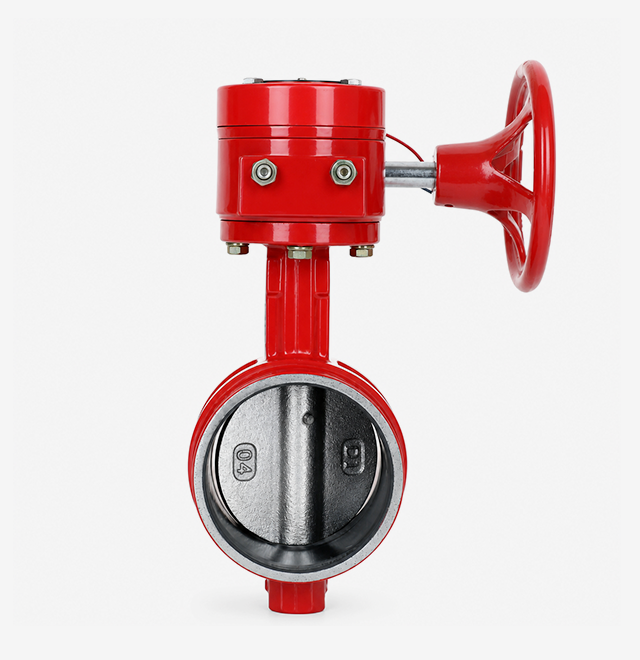
Full Lug Type Butterfly Valve – Industrial Grade Design for Dead-End Service and Isolated Pipeline Control
Tianjin Tangzheng Valve Co., Ltd. makes this full lug type butterfly valve. It is built for sectional isolation. Equipment repair and dead-end service are also jobs it handles. The company has more than 25 years of valve production experience. Its integrated 2,000 m2 facility turns out more than 50 valve models. That same facility handles over 600 requirements. Distributors and contractors buy from Tangzheng. Industrial project buyers across the world do too. Sizes cover the DN50-DN300 range. Pressure ratings are PN10/PN16. You can choose ductile iron or stainless steel. Seat options include EPDM and NBR. PTFE and FKM are also available. Our manufacturing skills include foundry work and precision casting. They also cover machining and assembly. Testing is part of the process too. We deliver steady quality and a competitive price. Usual lead times are 7-15 business days.
What Makes the Full Lug Butterfly Valve Different?
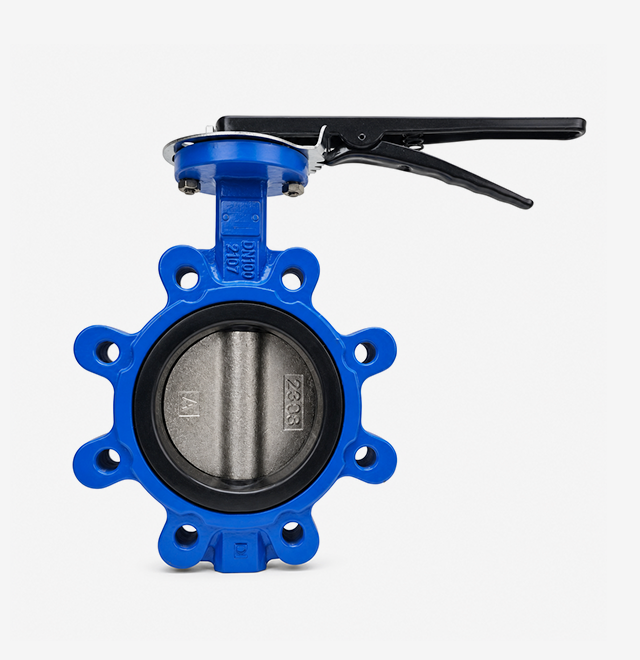
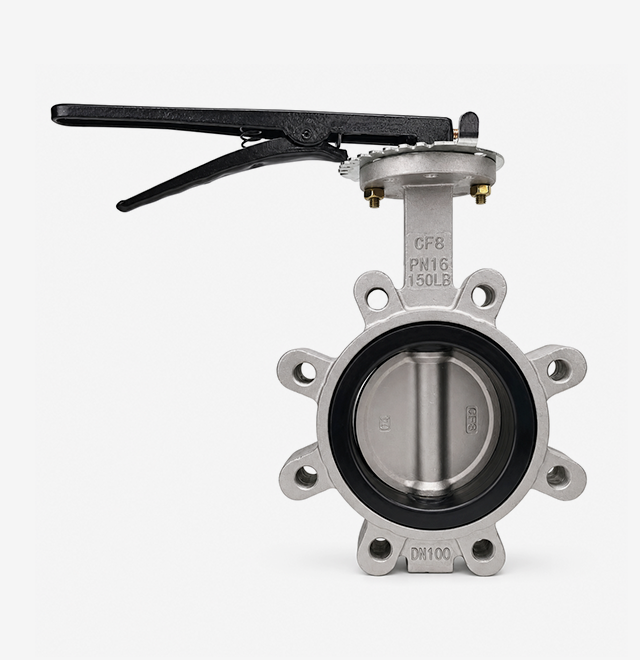
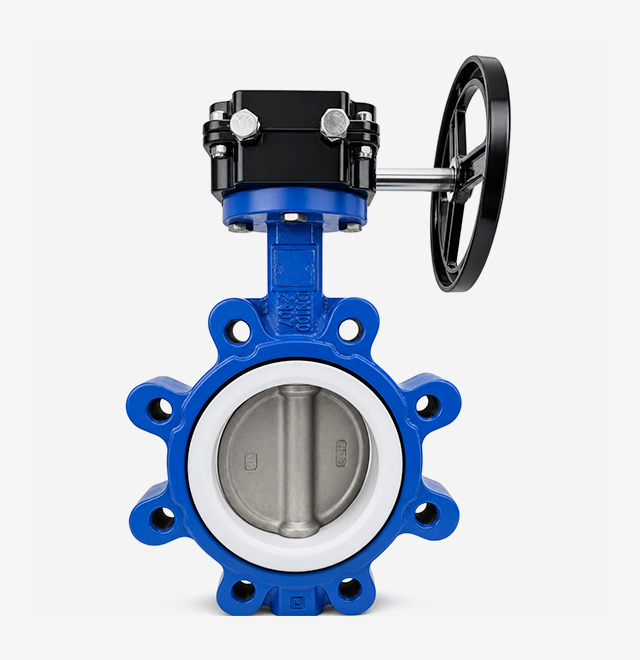
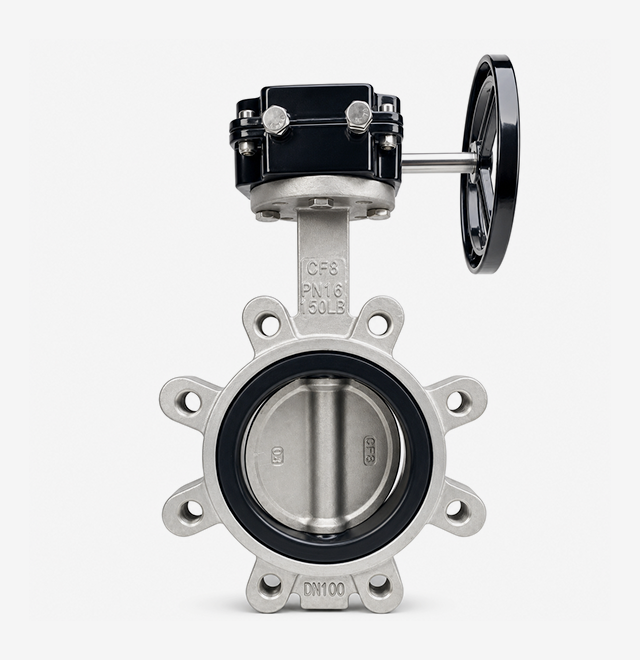
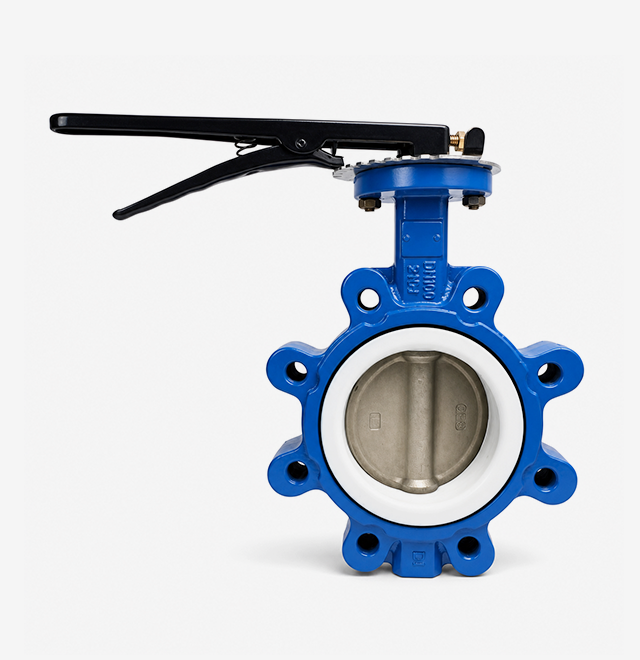
Threaded inserts sit at every bolt hole on This product. Wafer versions work in a different way. They depend on flange compression from both sides. With the lug design, you bolt the valve to each flange on its own. The connection stays stable even after the downstream plumbing comes off.
You can shut off a pump on its own. A metre or a filter can be isolated too. The whole line can stay in service. Upstream pressure stays on during downstream maintenance or a component swap. Downtime drops. Troubleshooting gets easier in water treatment plants. It also gets easier in HVAC systems and industrial process lines.
Key Design and Material Features
Our valve body comes in ductile iron (QT450), carbon steel (WCB) or stainless steel (CF8/CF8M). That lets you match corrosion and pressure needs. For the disc, choose ductile iron, SS304, SS316 or aluminium bronze. Those materials hold up better in harsh conditions.
The materials used for seats are EPDM for general water and air, NBR for suitable oils, PTFE for chemical resistance and VITON for high temperature or hard situations. Each seat is carefully moulded to give a tight seal over the complete 0-167°C operating temperature pressure range.
The shaft is made in house of Q235, 2CR13, SS304 or SS316 with stringent tolerance on diameter, shaft-end configuration and disc-to-shaft connection. As we sell shafts to a number of valve manufacturers we know the direct impact that five crucial areas - shaft diameter, tolerances, shaft-end design, disc to shaft fit and assembly torque - have on seating, torque stability and service life.
Technical Specifications
| Parameter |
Value |
| Size Range |
DN50–DN300 |
| Pressure Rating |
PN10 / PN16 |
| Body Material |
QT450 / WCB / CF8 / CF8M |
| Disc Material |
Ductile Iron / CF8 / CF8M / Aluminum Bronze |
| Seat Material |
EPDM / NBR / PTFE / VITON |
| Shaft Material |
Q235 / 2CR13 / 304 / 316 |
| Connection Type |
Full lug |
| Operation |
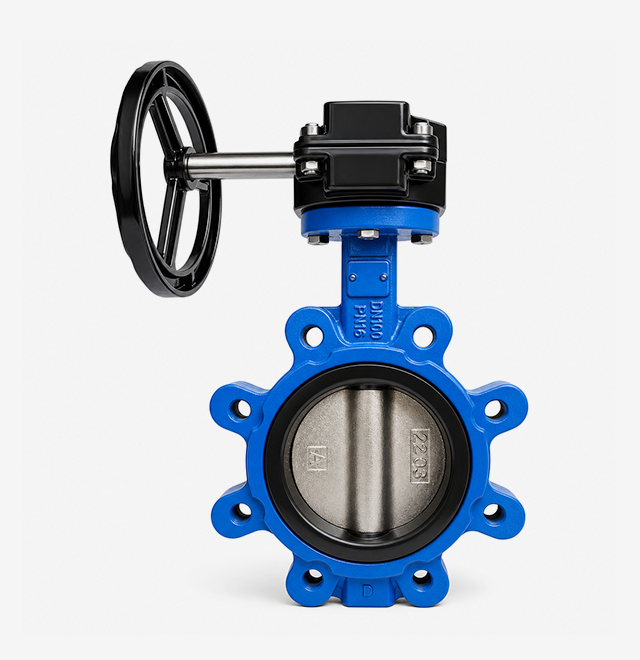
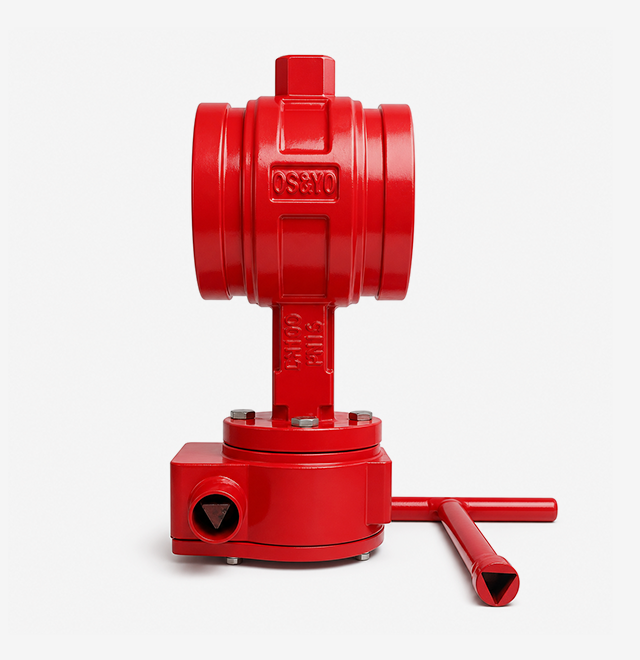
Handle / Gear / Electric / Pneumatic |
| Suitable Media |
Water, Sewage, Air, Neutral Liquid |
| Temperature Range |
0–167°C |
Application Scenarios
Water supply and drainage networks use this valve to check line sections from time to time. At municipal wastewater treatment plants, lug designs let crews service pumps and valves. No one has to drain the entire basin.
Chilled-water and heating loops are where HVAC contractors put them. The aim is to isolate equipment and keep the rest of the system on-line. Fire protection systems gain from sturdy seating and bi-directional pressure capabilities. Backflow then cannot put safety at risk.
Industrial pipes need shut-off they can count on, whether the line serves chemical processing, power generation or metallurgy. Line pressures differ by site. The lug layout delivers that dependability. It also makes routine servicing and emergency repairs simpler.
Manufacturing and Quality Control
Our process is vertically integrated. Stainless steel precision casting for a full lug type butterfly valve happens in our own foundry. Machining runs in house too, and so does assembly. Each valve is checked on incoming material. Machining gets verified after that. Assembly is inspected at every stage. Then comes pressure testing at 1.5× nominal, plus sealing tests as per API 598. Finished valves move to warehousing. A final inspection closes the run before packing.
Day-to-day work runs on management systems built around ISO. Product compliance paperwork stays current for the markets we serve. Alloy composition needs checking too, so we carry out positive material identification (PMI) on stems and discs.
Customization and OEM Support
Drawings, samples or project specifications are all we need to start. Materials can be changed to suit you. So can dimensions, pressure ratings and connection types. We also adjust actuation, coatings, markings and labels. Private label packaging is available too. Our MOQ rules stay flexible. Trial orders are welcome. Small batches get the same treatment. Large project volumes are no problem either.
Shaft length, disc thickness, seat hardness and flange drilling pattern are yours to set. During working hours our engineering team answers within 1 hour. Before a quotation goes out, 6 key points get confirmed. Size. Pressure. Medium. Temperature. Connection Standard. Quantity. Getting this settled up front keeps selection mistakes out. Rework drops. So do late deliveries.
Delivery and Logistics for full lug type butterfly valve
Standard custom goods arrive in 7-15 business days. A few in-stock models ship the same day or the next. Our plant sits in Jinnan District, Tianjin. Tianjin Port is a short run away. So are the main expressways and Tianjin Binhai International Airport, which handles marine, road and air freight.
Freight forwarding is part of what we arrange. Logistical milestones get tracked too. That way your project schedule is easier to manage. For long-haul shipments, valves go in export wooden cases. The packaging protects them on the way to South-east Asia and the Middle East. Europe and the Americas receive the same protection.
Warranty and Technical Support
Standard products that apply come with a 12–18 month warranty. That warranty depends on the final quotation or contract terms. Our support team helps with product selection. It also checks whether the product fits your operating conditions. Installation guidance is available. So is troubleshooting help. Remote video assistance is an option. Genuine spare parts can be supplied.
Business hours bring a reply within one hour. After-sales service includes documents. Commissioning guidance is part of it too. Field support is there when you need it.
Packaging
Every valve gets cleaned and inspected before we wrap it in protective film. Delicate parts, like the actuator mount and the shaft, sit in their own boxes for extra cushioning. When several units ship together, we pack them into export wooden cases. Those cases are lined with moisture-barrier material. Product codes, quantities, and shipping marks for the full lug type butterfly valve go on the label, so customs and job site crews can spot what they need fast.
FAQ
Q: Is dead-end service something a wafer valve can handle?
A: No. Wafer valves require pressure from both sides to hold the seat in position. Only lug-type valves are rated for dead-end service where downstream piping can be removed.
Q: Compared with a wafer type, what does a lug type mainly give you?
A: With the lug type, downstream piping can be taken off while the upstream side stays under pressure. Servicing gets easier. The system also spends less time offline.
Q: Which seat material is best for high-temperature applications?
A: EPDM tops out at about 120°C. Steam and higher temperatures call for PTFE. Metal-seated designs made for demanding service are another route, so ask us.
Q: What does ISO 5211 change when you pick an actuator?
A: The valve-to-actuator mounting interface is standardized by ISO 5211. Check the flange size and the bolt pattern on your valve. That way you know an electric or pneumatic actuator will fit correctly.
Q: What makes bi-directional sealing matter?
A: Fluid can flow either way and the seal still holds. Backflow gets blocked no matter which direction the medium moves. That matters in pumping stations and fire protection systems. Pressure testing from both sides proves it.
Q: Does the stem go in vertical or horizontal when I install the valve?
A: Go with horizontal. Debris can build up around the stem when you mount it vertically. Torque then goes up, and the seat wears out faster over time.
Q: Can you provide OEM service?
A: Yes. Materials, dimensions, pressure ratings, connection types, actuation methods, coatings, markings, labels, and packaging all get customized. Send us your drawings, samples, or project specifications and we build to them.
Contact Us
Got a full lug type butterfly valve to specify, or a custom project in mind? Send the details to youweipan21@gmail.com.