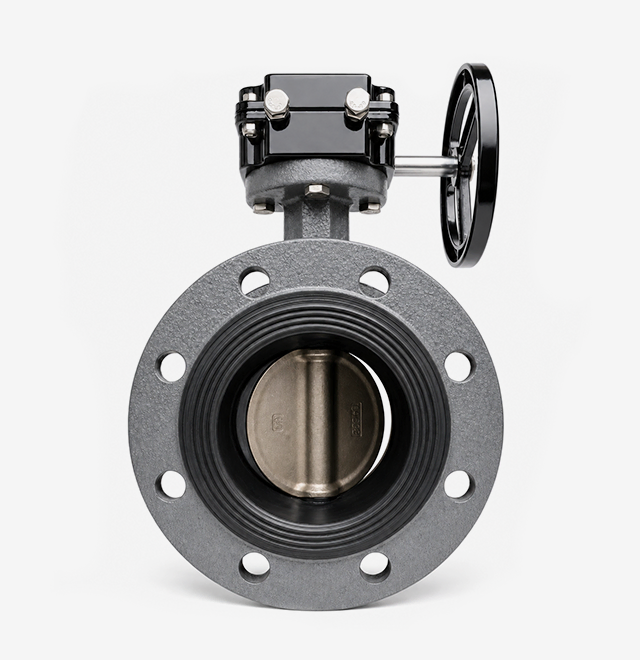
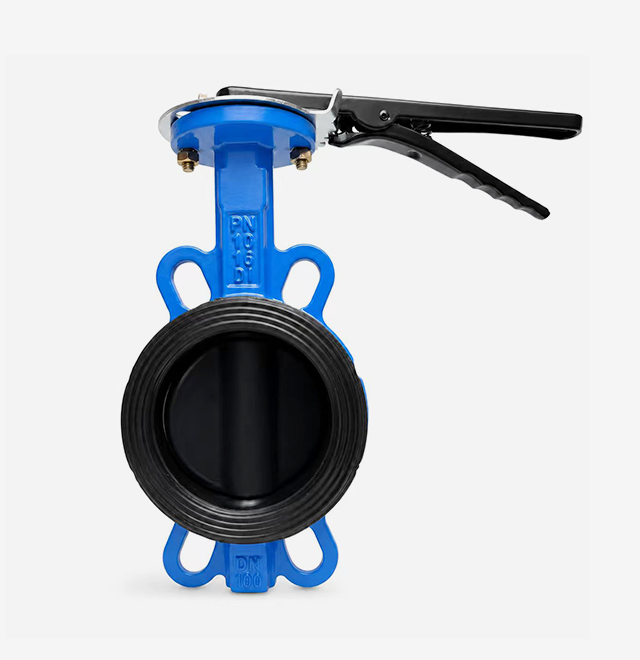
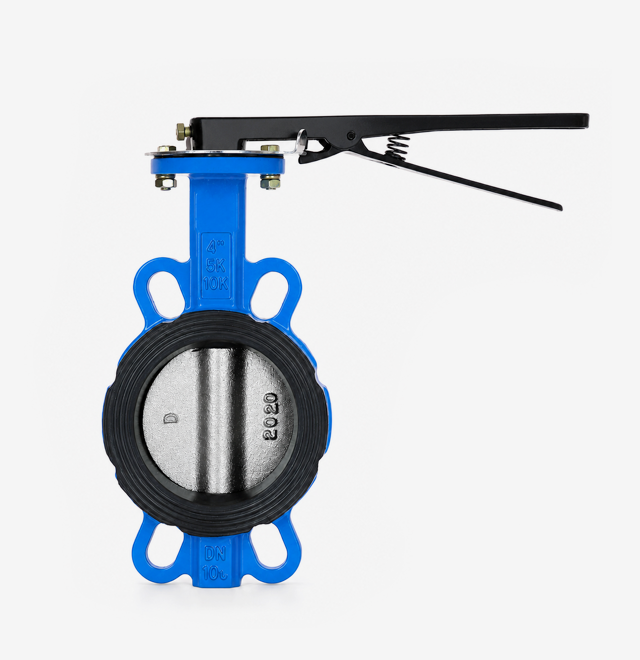
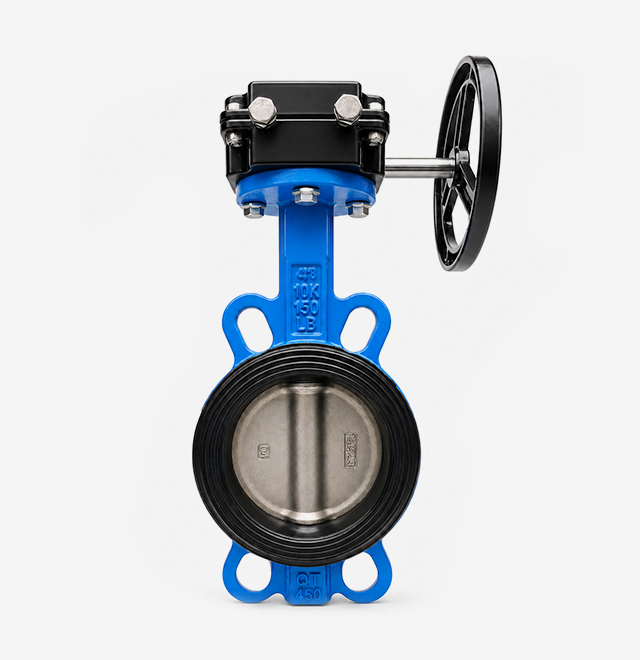
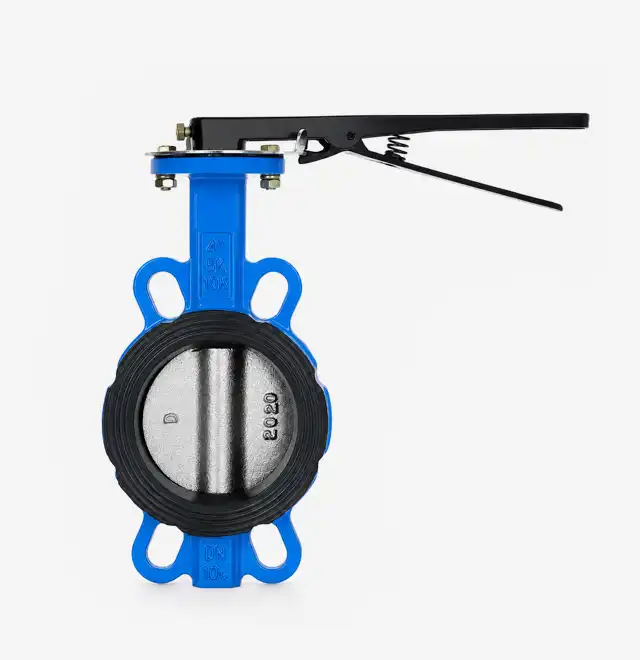
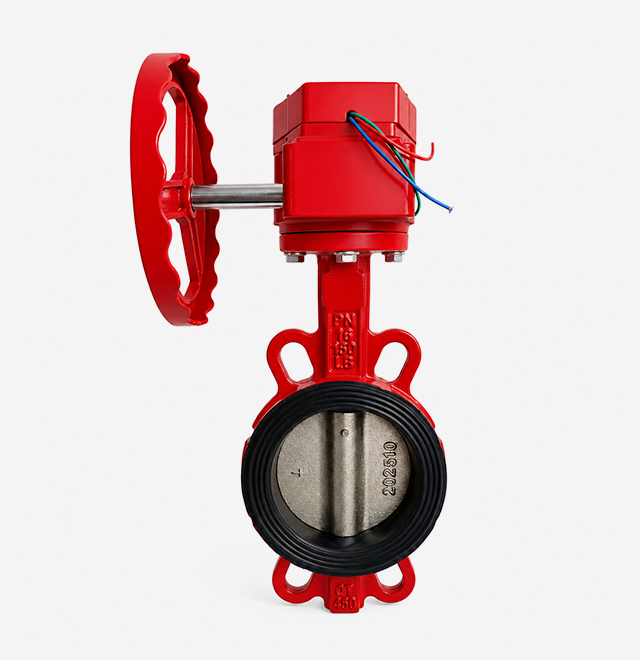
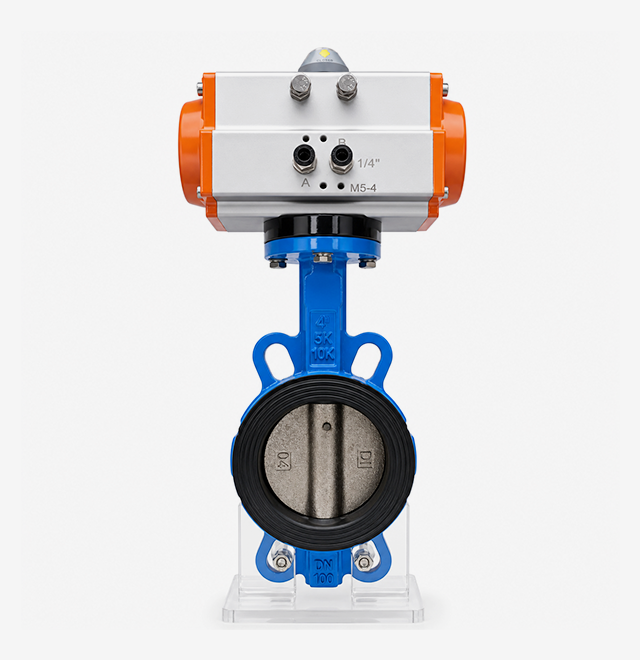
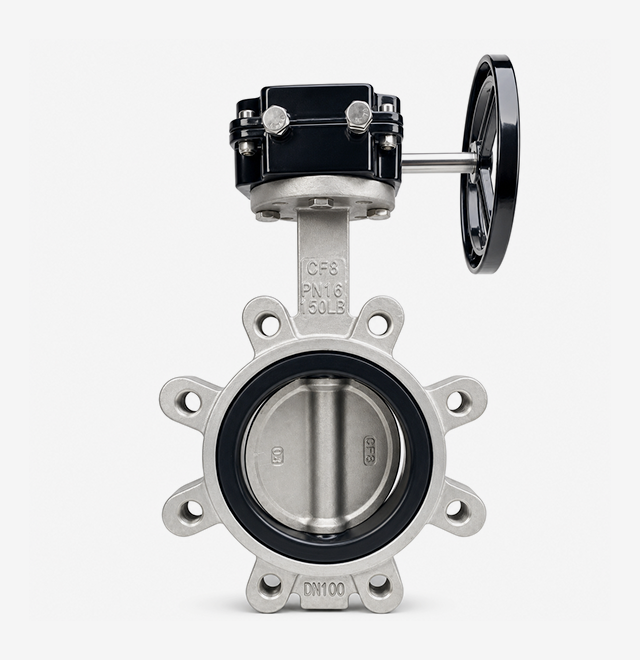
An EPDM seated lever operated double flanged butterfly valve seals by pressing a rubber seat against a disc, and it opens or closes with a 90° turn of the lever. Sealing depends on the seat compound, the disc finish, and shaft alignment. Torque depends on valve size, line pressure, seat friction, and how long the valve sits closed. These two traits pull against each other: a tighter seat seals better but raises torque. Check both before you order, along with flange drilling, temperature, and handle clearance. This guide explains how each factor works and which details to send with a quote request.

How an EPDM Seated Lever Operated Double Flanged Butterfly Valve Seals
Body, Disc, Shaft, and Lever
A butterfly valve has four main parts: body, disc, shaft, and operator. In an EPDM seated lever operated double flanged butterfly valve, the body carries a flange on each end, so it bolts straight to the pipe flanges. The disc sits on a shaft in the flow path, and a 90° lever turn swings it from closed to open. Our series runs from DN50 to DN300 (2 to 12 inches) at PN10 or PN16, with ductile iron, WCB, SS304, or SS316 bodies. We hold five shaft items to close control: diameter, tolerance, shaft-end form, disc-to-shaft joint, and assembly torque. A loose shaft fit causes sticking and uneven wear.
How the Seat Creates a Tight Seal
The seat is a rubber ring that lines the body bore. When the disc closes, its edge compresses the rubber, and that squeeze blocks flow. In many designs, line pressure pushes the seat tighter against the disc, so the seal holds as pressure builds up to the rated limit. Three things decide how well an EPDM seated lever operated double flanged butterfly valve seals: the seat compound, the disc edge finish, and shaft alignment. A rough disc edge raises friction and can tear rubber. An off-center disc squeezes one side too hard and lets the other side leak. We match the disc to the seat during production because a good fit keeps torque low.
Chemical and Temperature Limits
EPDM handles water, treated water, wastewater, air, and many neutral liquids. It resists ozone, weather, and aging, which helps on outdoor risers. It does not tolerate mineral oil, fuel, or most hydrocarbons, so those lines need NBR or FKM, and aggressive chemicals may need PTFE. On temperature, EPDM is generally rated for continuous service up to about 120°C (248°F), though compound, pressure, and medium change the real limit. Chilled water and sprinkler water sit far below that. For hot-water loops near 95°C (203°F), ask for written temperature-and-pressure data first, because long heat exposure hardens rubber and shortens seat life.
Understanding Torque in an EPDM Seated Lever Operated Double Flanged Butterfly Valve
Breakaway, Running, and Seating Torque
Torque is the twisting force needed to turn the disc, and three values matter. Breakaway torque starts the disc from rest. It is often the highest value, especially after months closed, when the rubber has settled around the disc. Running torque keeps the disc turning against the flow. Seating torque finishes the closing stroke and compresses the seat for a tight shutoff. Each value shifts with differential pressure, flow velocity, disc shape, temperature, scale, and how often you cycle the valve. Pipe size alone predicts none of them. A DN100 valve on a 16-bar line can demand far more effort than the same valve on a low-pressure drain.
When a Lever Is Enough and When to Use a Gearbox
A lever works on smaller sizes where one person can close the valve with a steady pull. Many suppliers recommend a gear operator from about DN200 (8 inches), and we share that rule of thumb, but pressure matters as much as size. Ask for the torque figure at your working pressure, then compare it with what the lever can deliver, with a safety margin. Do not oversize far beyond that margin, because a larger operator costs more and slows the crew. A lockable lever helps on lines that stay closed during maintenance. Our EPDM seated lever operated double flanged butterfly valve also accepts gear, pneumatic, and electric operators.
Handle Position, Indication, and Future Actuators
On a lever valve, the handle shows the disc position. A handle aligned with the pipe means open, and a handle crossed over the pipe means closed. Inspectors on fire protection jobs look for a clear 90° stop and a visible indicator, and NFPA 13 calls for listed indicating control valves on sprinkler systems. Listing is separate from torque, so tell us early if your project needs UL or FM listing, and we will confirm what we can supply. In pump rooms, the handle sweep can hit a wall or pipe, so mark the handle direction on your drawing. Keep the torque data too, because it also sizes an electric or pneumatic actuator later.
Dimensions, Flange Standards, and Ordering by Zone
Face-to-Face Length and Flange Drilling
A double flanged valve sits between two pipe flanges, so face-to-face length matters. Standards such as EN 558, GB/T 12221, and ASME B16.10 set these lengths, and they differ. Confirm which one your drawings call for, then compare the valve drawing with your piping layout, gaskets, and bolts. Flange drilling matters just as much. PN10 and PN16 are metric ratings, and metric drilling such as EN 1092-2 differs from ASME B16.5 Class 150 on most sizes, so the two do not interchange. If your job uses Class 150 pipe, send us the flange standard first so we can quote the right drilling on your EPDM seated lever operated double flanged butterfly valve.
Choosing Between PN10 and PN16
A higher rating is not automatically better. Pick the rating from your system design pressure, then match the flanges around it. At room temperature, PN10 covers 10 bar (about 145 psi), and PN16 covers 16 bar (about 232 psi). A PN16 valve on PN10 pipe may not bolt up, and it adds cost without benefit. A PN10 valve on a 12-bar pump discharge falls short. Pressure also drives torque, so the rating can change your operator choice. Pump rooms and fire lines often see higher pressure than a simple building loop, so check the pump's shutoff head, not only the normal duty point.
Mixed Sizes and Ready-to-Install Delivery
Contractors rarely order one size. A single floor can need DN50 branch isolation, DN100 riser valves, and DN200 mains. Share your BOM by floor or zone, and we can supply mixed sizes in one project order and pack and mark them by zone. Pump-skid builders can order small batches and ask about private-label nameplates under our OEM/ODM service. We also supply check valves and rubber expansion joints, so you can review lengths for the whole pump set together. Confirm lengths and drilling at the drawing stage so each EPDM seated lever operated double flanged butterfly valve goes in without rework. Valves ship in wooden export cases.
Installing and Maintaining an EPDM Seated Lever Operated Double Flanged Butterfly Valve
Installing Without Damaging the Seat
Start by checking the size, pressure rating, seat material, flange drilling, and the condition of the valve. Line up the pipe flanges first, because the valve cannot fix pipe misalignment, and bolt stress raises torque. Clear welding slag, stones, and scale from the pipe, since hard debris scars the seat. Open the disc slightly so its edge stays clear of the pipe and gasket, then tighten the bolts in a diagonal pattern over several passes. Ask us whether your model needs separate gaskets. An EPDM seated lever operated double flanged butterfly valve goes in fastest when the crew has the flange drawing on site.
Commissioning Checks
Before you pressurize, flush the line so debris does not score the seat. Then turn the lever through full travel by hand. The handle should stop cleanly at both ends, and the position indicator should match the disc. Fill the line, bring it to test pressure, and look for weeps at the flange joints and shaft area. Close the valve and check for leakage downstream. Write down the date, the pressure, and the effort you felt at the handle. That note gives a baseline when someone later reports a stiff valve. On fire protection work, keep these records with your acceptance paperwork.
Maintenance, Troubleshooting, and Storage
Operate each valve through a full stroke during routine rounds, since valves that never move tend to stick. Check flange joints, the shaft area, coating, position indicator, and lever lock. Rising effort usually traces to misaligned flanges, debris, scale, corrosion, a seat swollen by an incompatible fluid, or long idle time. For leaks, first confirm the disc is fully closed, then look for foreign material, then seat and disc condition, then flange alignment. Store spare valves in a clean, dry, shaded place away from ozone, oil, heat, and sunlight. Our team offers remote video help for installation and troubleshooting, and we supply genuine spare parts.
Choosing the Right Valve and Supplier
Match the Valve to Your Medium and Application
Choose by the actual medium, not the industry label. For drinking water in the United States, ask whether the EPDM compound carries NSF/ANSI/CAN 61 certification, and tell us if it applies so we can confirm what we can supply. For wastewater, review solids, grit, oils, and cleaning chemicals. Chilled-water loops suit an EPDM seated lever operated double flanged butterfly valve well, while hot-water loops need the temperature check above. For fire protection, confirm any listing your authority requires. Where the medium is corrosive, review the body, disc, shaft, and coating together. Double flanged valves hold steady under vibration and pressure changes, while wafer valves save weight and space.
What Happens at Our Factory Before Shipping
Tianjin Tangzheng Valve Co., Ltd. has made valves since 1998, and the current company dates to 2006. Our 2,000 m² site in Jinnan District, Tianjin, employs about 60 people and covers foundry work, machining, assembly, pressure testing, and packing under one roof. Quality checks on each EPDM seated lever operated double flanged butterfly valve include a hydrostatic shell test per ISO 5208 at 1.5 times rated pressure, a low-pressure air seat test, EPDM hardness and compression set tests, and torque testing. You can request material reports for the disc and stem. We show ISO 9001 and fire product certificates only while valid and within the exact scope on the original. We confirm the warranty period in writing in the quotation or contract.
Details to Send for a Fast Quote
To price an EPDM seated lever operated double flanged butterfly valve order, send six items first: pipe size (DN), working pressure, medium and temperature, flange standard, operation method, and quantity. Add your drawing or BOM by floor or zone, the destination port, and any papers your inspector needs. With that information, we can quote the right seat, body, and disc the first time, which avoids rework and surprise costs. A typical flow runs from drawing and BOM to quote, then batch supply that follows your floors, then acceptance. Stock items ship the same or next day, custom orders take 7–15 business days, and we support trial orders, small batches, and large projects.
Conclusion
An EPDM seated lever operated double flanged butterfly valve works best when seat, torque, and connection details match the system. The EPDM seat seals by compression against the disc, so compound, disc finish, and shaft alignment decide leak performance. EPDM suits water, air, and neutral liquids but not oils, and hot loops near 95°C need written temperature data. Torque combines breakaway, running, and seating effort, and it rises with pressure, debris, and idle time, so size alone cannot pick a lever or gearbox. Face-to-face length, PN10 or PN16 rating, and flange drilling must agree with the mating pipe, especially against ASME Class 150 flanges. Careful installation, periodic cycling, clear handle indication, and supplier documents protect the seal and keep operating effort predictable.
FAQ
1. Is an EPDM seated lever operated double flanged butterfly valve suitable for oil lines?
No. EPDM swells in mineral oil, fuel, and most hydrocarbons. Choose NBR or FKM for oil-based media and PTFE for aggressive chemicals. Send us the medium so we can confirm the seat.
2. What temperature can the EPDM seat handle?
EPDM is generally rated for continuous service to about 120°C (248°F), but compound, pressure, and medium change the limit. For hot loops near 95°C, ask for written data.
3. When should I switch from a lever to a gear operator?
Many suppliers suggest a gearbox from about DN200 (8 inches). Pressure also counts, so compare torque at your working pressure with the lever's output.
4. Can I put a PN16 valve on ASME Class 150 flanges?
Not on most sizes. PN ratings use metric drilling, and Class 150 flanges use different bolt circles. Send your flange standard before you order.
Request a Quote from TZD for an EPDM Seated Lever Operated Double Flanged Butterfly Valve
Send TZD your DN size, PN rating, medium, temperature, flange standard, and quantity, and our team replies within one hour during business hours. As an EPDM seated lever operated double flanged butterfly valve manufacturer, we ship in-stock models the same or next day, build custom orders in 7–15 business days, and support OEM/ODM requests. Email youweipan21@gmail.com for details.

References
1. AWWA C504 Rubber-Seated Butterfly Valves, American Water Works Association, 2015
2. EN 558 Industrial Valves: Face-to-Face and Centre-to-Face Dimensions of Metal Valves for Use in Flanged Pipe Systems, European Committee for Standardization, 2017
3. ISO 5208 Industrial Valves: Pressure Testing of Metallic Valves, International Organization for Standardization, 2015
4. NSF/ANSI/CAN 61 Drinking Water System Components: Health Effects, NSF International, 2023
5. NFPA 13 Standard for the Installation of Sprinkler Systems, National Fire Protection Association, 2022
6. Valve Selection Handbook, Gulf Professional Publishing (Smith and Zappe), 2004