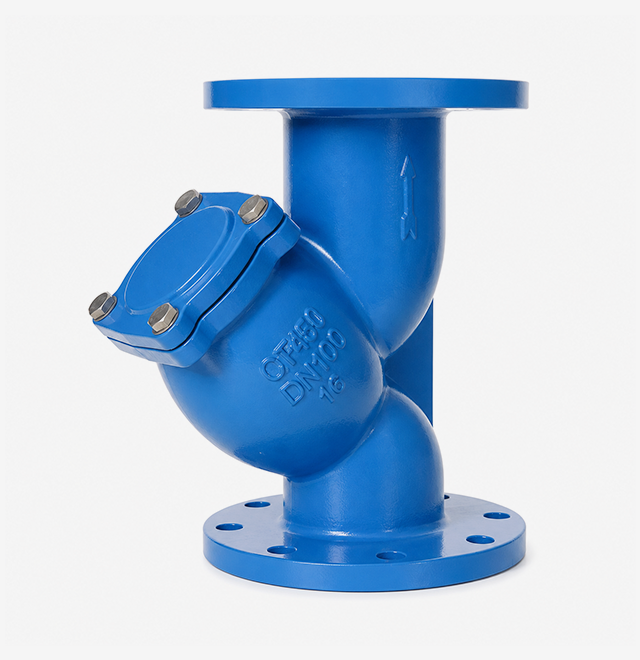
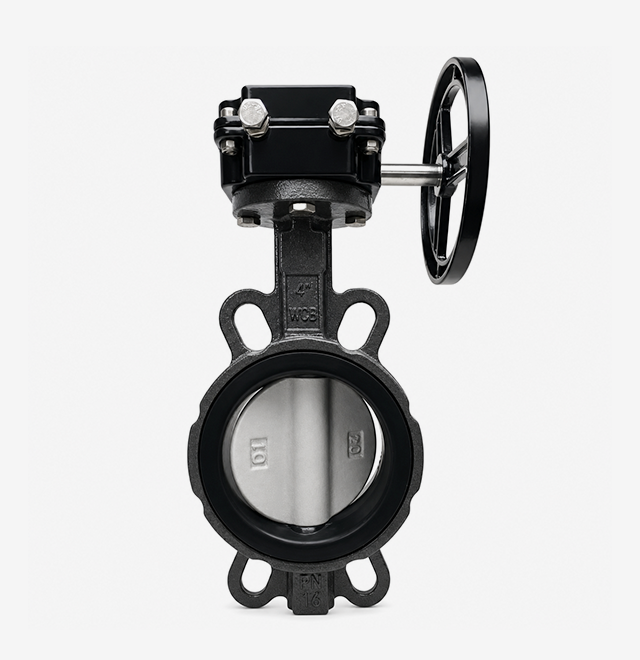
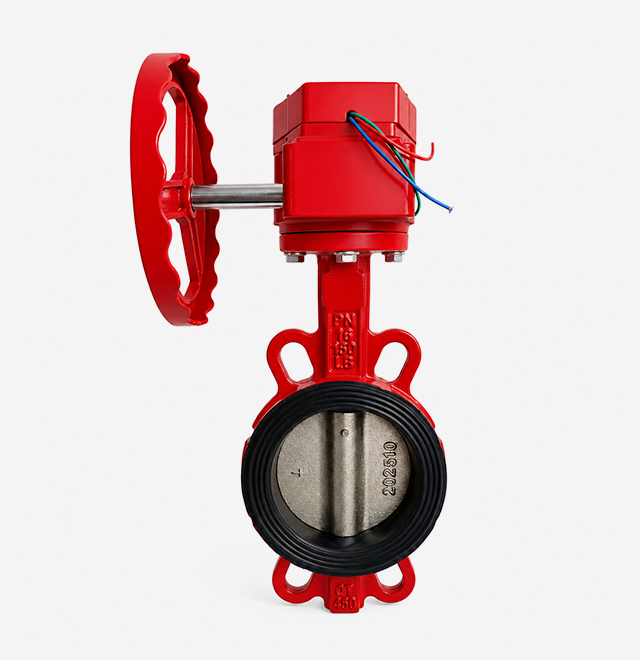
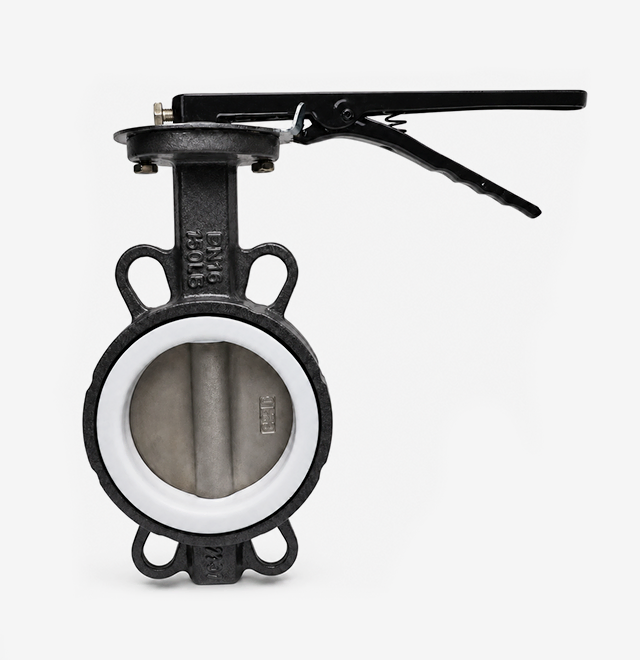
If you manage pump station procurement or specify valve packages for mechanical rooms, you already know that one wrong component can delay commissioning and trigger costly callbacks. This guide focuses on the 4 inch flanged check valve—a workhorse size in DN50–DN300 pump discharge lines—and walks through how it works, how to select it correctly, and what to confirm before you place an order. Whether you source for a single project or roll valves into a recurring BOM, the information here is built for engineers and procurement teams who need data, not marketing language.

What Is a 4 Inch Flanged Check Valve and How Does It Work?
Definition and Core Function
A flanged check valve is a device that stops flow in one way. It is put on the pump's output side. When forward pressure is higher than cracking pressure, it opens. When flow drops or turns around, it instantly shuts. The flanged end connection, which is drilled to EN 1092-2 or GB/T 17241.6 bolt patterns, makes a rigid joint with a gasket that doesn't loosen even when pressure is applied and removed.
Spring-Assisted Closing Mechanism
A silent check valve is different from a regular swing type because it has a disk design with a spring that helps it move. As the forward flow slows down, the spring starts to close the disk before the reverse flow speeds up. This early closure cuts down on the pressure surge that happens when a pump stops working, which is commonly known as "water hammer." Published hydraulic tests show that spring-assisted check valves can slow down reverse flow to almost nothing before they fully close. This is in contrast to slam-type designs, where the disk doesn't close until reverse flow has already sped up.
Material Options and Their Impact
The cost and service life are directly related to the body material. For a reasonable price, ductile iron (QT450) works well for basic water and sewage service. Carbon steel (WCB) can handle more dynamic stress. Grades CF8 and CF8M of stainless steel make it less likely that they will rust in harsh or treated water. How chemically compatible the seat is depends on whether it is made of EPDM, NBR, or PTFE. EPDM is usually used for drinking water and sewage up to 120 °C.
Types and Applications of Flanged Check Valves
Swing, Lift, and Spring-Assisted Designs Compared
Swing check valves close with backpressure and gravity, which is cheap but can cause them to slam in systems with low backpressure. Lift check valves seal better in vertical lines, but they also drop the pressure more. This guide is about spring-assisted quiet check valves, which close on their own. This makes them the best choice for pump discharge lines where noise and water hammer are acceptance tests.
Pump Station and Fire-Pump Room Applications
Four to thirty check valves, mostly in the DN50 to DN300 range, are set up in each site at pump stations that handle water supply, sewage transfer, and watering. There are a lot of start-stop cycles in fire pump rooms, which makes reverse-flow pressure spikes stronger. In Malaysia, Thailand, Vietnam, and other similar areas, a spring-assisted flanged check valve is used in both situations because it stops reverse flow and lowers working noise, which are two things that are directly listed on checklists for pump room acceptance.
HVAC, Water Treatment, and Industrial Pipelines
Non-slam behavior keeps pipe joints from wearing out in chiller loops and cooling tower circuits. Even cracking pressure across all units in a multi-pump setup helps water treatment plants keep one pump from back-feeding another. Industrial process lines that carry neutral liquids at temperatures up to 120 °C can use 4 inch flanged check valve that are seated in EPDM or PTFE.
How to Choose the Right Flanged Check Valve for Your System
The Six Parameters You Must Confirm First
If you choose a flanged quiet check valve without all the information you need, the opening pressure might not be right, the disk might wobble, or there might be too much head loss. Before getting a quote, make sure you know these six things: the nominal diameter (DN), the pressure rating (PN10 or PN16), the flow rate and velocity, the medium type (water, sewage, or neutral liquid), whether the installation will be horizontal or vertical, and the flange standard (EN 1092-2 or GB/T 17241.6). Each parameter changes the spring rate, the shape of the disk, and the choice of seat.
When engineers choose a 4 inch flanged check valve for pump output work, these are the main things they look for:
- Cracking pressure vs. pump head: Spring rate must be low enough that the disc opens fully at minimum pump flow, yet high enough to close before reverse velocity develops. Mis-specification causes disc flutter, which generates noise and accelerates seat wear.
- Flow resistance (pressure drop / Cv): Engineers calculating system head loss need actual Cv data. A full-bore spring-assisted design typically produces lower pressure drop than a lift type of the same bore size.
- Installation orientation: Horizontal and vertical-upflow installations require different spring configurations. Vertical-downflow orientation is generally not recommended without confirming spring force with the manufacturer.
- Flange standard compatibility: EN 1092-2 covers European and British standard projects common in Southeast Asia; GB/T 17241.6 covers Chinese-standard drawings from China-funded infrastructure projects. Dual-standard availability eliminates redrawing at the design stage.
When these criteria are checked regularly, there is less chance of a failure during commissioning that needs a valve to be replaced after the pump starts up.
Material Compatibility and Pressure Class
PN10 works well with irrigation and water supply systems that use low pressure. PN16 is the standard for most fire pumps and pump discharges. Bodies made of stainless steel (CF8/CF8M) and stems and springs made of SS304 or SS316 don't rust in treated water or mild chemical service. A normal QT450 body with an NBR or EPDM seat is the most cost-effective way to handle sewage and raw water.
Supplier Evaluation Metrics
In addition to price, make sure the seller can give you information about the hydrostatic shell test (usually 1.5× rated pressure per API 598 / ISO 5208), the seat leakage test results, the material tracking documents, and whether the dimensions meet EN or GB flange standards. When you buy butterfly valves, gate valves, and Y strainers from the same factory, you can look at the whole valve bill of materials (BOM) in one package. This cuts down on the number of suppliers you need and makes inspection easier.
Installation, Maintenance, and Troubleshooting
Installation Steps That Prevent Failures
Before bolting, the faces of the flanges must be clean, straight, and free of pipe stress. Install a gasket that is the right thickness for the flange class; a gasket that isn't squeezed enough will leak when the pressure changes. To get the right pressure for the sealing material, tighten the bolts in a cross-pattern. Check that the flow-direction arrow on the valve body matches the direction of the pump discharge. One of the most common mistakes in the field with check valves is installing them backward.
Routine Maintenance Schedule
If a 4 inch flanged check valve is used in a pump that is always running, it should be inspected visually every six months and fully once a year. Look for wear, scale, or debris buildup on the disk, spring, and seat. If your EPDM or NBR seats start to crack or swell, you should get new ones right away. Even though spring fatigue is rare, it should be checked out if strange noises start to happen after a long time of use.
Troubleshooting Common Problems
Noise and shaking after starting up the pump are often signs of disk flutter, which is caused by not enough flow velocity at the valve bore. Check the actual flow against the valve's minimum recommended velocity. If water leaks past a closed valve, it means that the seat is damaged or that something is stuck on the sitting face. If the disk doesn't open, it means that the spring rate is too high for the pump's output head. Send the pump curve to the maker so that they can look at it again.
Pricing, Procurement, and Ordering Information
What Determines the Price
The main thing that affects price is the type of the material: QT450 body valves are cheaper than WCB, which is cheaper than CF8M. How thick the walls are and how much they weigh are affected by the pressure class (PN10 vs. PN16). Custom designs, like different flange drilling options, special finishes, or non-standard face-to-face measurements, raise the cost of tools and inspection. The fastest wait times are for standard stock sizes between DN50 and DN300.
How the Ordering Process Works
Standard steps for buying pump station packages include drawing up the pumps, making sure the right valves are chosen, inspecting a sample or first item, and then sending the whole order. Give yourself four to eight weeks from the time you confirm the parameters until you get your first order. It's easy to get a monthly moving supply once a flanged check valve is added to a repeating pump station bill of materials. Flanges and coatings are kept safe during sea freight in export wooden case packaging.
Volume Pricing and Package Discounts
When you order check valves, butterfly valves, gate valves, and Y strainers from the same company, you can usually get a discount for the whole package. This also cuts down on the number of inspection certificates, packing lists, and customs reports you have to handle. When you buy between 2,000 and 15,000 check valves a year, a framework pricing deal locks in shipping priority and lowers the cost per unit.
Conclusion
One thing a 4 inch flanged check valve is supposed to do is stop reverse flow. But if it doesn't do its job right, it can damage pipes, cause noise complaints, and fail acceptance tests, which are the system integrator's fault. The spring-assisted quiet check valve comes in sizes DN50 to DN300, PN10 to PN16, and meets both EN and GB flange standards. It is designed to protect against the risks of water hammer and noise during shutdown that are listed on pump station acceptance forms. Six proven factors determine which option is the right one. When check valves, butterfly valves, gate valves, and strainers all come from the same confirmed source, procurement is more efficient. Check out the frequently asked questions (FAQ) section below for quick answers, then contact us directly to talk about the details of your project.
FAQ
1.What pressure classes are available for a flanged silent check valve?
The standard range includes PN10 and PN16, which work well for most pump station and water supply needs in the DN50–DN300 bore range. For certain project needs, higher pressure classes can be talked about.
2.Can a 4 inch flanged check valve be installed vertically?
Yes, but the orientation of the installation must be confirmed before the valve is chosen. Different spring designs are used for horizontal and vertical-upflow positions. Vertical-downflow direction needs to be confirmed by the maker.
3.How long does a flanged check valve last in pump station service?
A spring-assisted flanged check valve in clean water or neutral liquid service can last ten years or more if it is properly chosen and inspected once a year. How long an EPDM or NBR seat lasts relies on the quality of the media and how often it is used.
4.What data do I need to request a quotation?
Make sure you know the DN, pressure rating, medium, flow rate, installation direction, flange standard (EN 1092-2 or GB/T 17241.6), and any limits for head-loss or water-hammer. Giving the pump curve cuts down on the selection review.
5.Can check valves be ordered as part of a complete valve package?
Yes. You can look at and get a quote for the 4 inch flanged check valve along with butterfly valves, gate valves, and Y strainers. This way, you can place one order for all the valves you need for a pump station.
Get a Fast Quote on Your Flanged Check Valve Order — Contact TZD Today
Tianjin Tangzheng Valve Co., Ltd. (TZD) sells flanged silent check valves with body options QT450, WCB, CF8, and CF8M to mechanical builders and pump station designers in Southeast Asia and other places. The valves come in sizes DN50 to DN300, PN10 to PN16, and DN50 to DN300. We are a direct manufacturer of 4 inch flanged check valves and offer free samples, OEM/ODM setups, and package deals with butterfly valves, gate valves, and strainers. For a quote the same day, email your six parameters to youweipan21@gmail.com or go to tangzhengvalves.com.

References
1. American Petroleum Institute. API 598: Valve Inspection and Testing. API Publishing Services, 2016.
2. International Organization for Standardization. ISO 5208: Industrial Valves — Pressure Testing of Metallic Valves. ISO, 2015.
3. Hydraulic Institute. Pump System Assessment Standard: ANSI/HI 9.6.7. Hydraulic Institute, 2021.
4. Tullis, J. Paul. Hydraulics of Pipelines: Pumps, Valves, Cavitation, Transients. John Wiley & Sons, 1989.
5. British Standards Institution. EN 1092-2: Flanges and Their Joints — Circular Flanges for Pipes, Valves, Fittings and Accessories, PN Designated — Part 2: Cast Iron Flanges. BSI, 1997.
6. Wylie, E. Benjamin, and Victor L. Streeter. Fluid Transients in Systems. Prentice Hall, 1993.