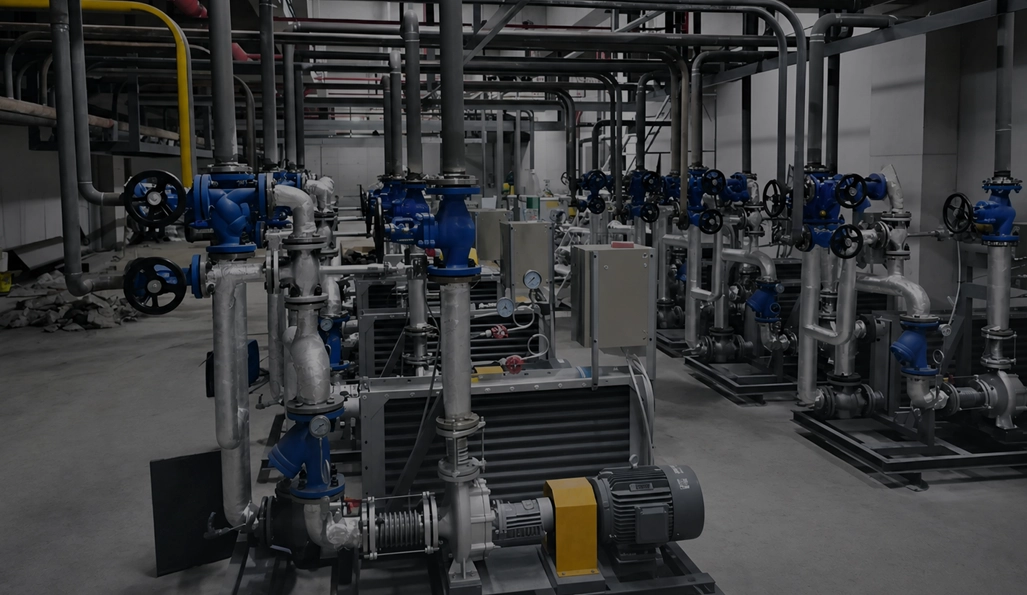
A flange type strainer prevents debris from damaging pumps by catching weld slag, rust, scale, and sand in a screen before those particles reach the impeller, seal, or flow meter. You bolt it into the pipeline ahead of the pump, choose a screen opening that stops harmful particles without choking flow, and clean the screen before pressure loss climbs. In this article, I explain how the device works, how to read mesh and micron ratings, how to size it, and how to install and maintain it. I also cover what a pump package builder should put in a request for quotation.

What Is a Flange Type Strainer and How Does It Work?
Definition and Main Parts
A flange type strainer is a mechanical filter with bolted flanged ends that sits inside a pressurized pipeline. It stops solid particles with a perforated plate or a wire mesh screen. It does not replace a cartridge or bag filter, which catch much finer particles. The main parts are the body, screen, cover, gasket, bolts, and a drain point. TZD builds the flanged Y-strainer, which has a compact Y-shaped body. Bodies come in QT450, WCB, CF8, or CF8M, and screens come in SS304 or SS316. The flanged ends make removal and replacement simple, even on large bores up to DN600 (about 24 inches).
How Fluid Moves Through the Screen
Fluid enters through the inlet flange and flows into the Y-shaped body. It then passes through the screen toward the outlet flange. Clean liquid continues to the pump. Particles larger than the openings stay in the screen leg and collect there until someone cleans them out. A flange type strainer separates solids by size and nothing else, so it does not change the chemistry of the liquid. That is why screen strength, gasket fit, and machining accuracy matter. A weak screen can collapse under heavy debris load, and a poor gasket can leak at the cover. Either problem puts the pump back at risk.
Where Pump Packages Use It?
A flange type strainer from TZD suits water, sewage, oil, and neutral liquids from 0 to 120°C (32 to 248°F). It comes in PN10 or PN16 (roughly 145 or 232 psi). Typical spots include pump suction lines, chilled and hot water loops, pumping stations, and the inlets of flow meters, control valves, and heat exchangers. Here is one limit I want you to remember: this range does not cover steam. Saturated steam at 1.0 MPa gauge sits near 184°C, well above the 120°C ceiling. If your skid sees steam, choose a product rated for it. Staying inside the stated media and temperature protects both the strainer and your customer's plant.
Flange Type Strainer Performance: Pressure Drop and Filtration Accuracy
Mesh Count Versus Micron Rating
Mesh count tells you how many openings fit in one linear inch of screen. The micron rating tells you the size of each opening. The two do not map one to one, because wire thickness changes the gap. ASTM E11 test sieve sizes put No. 20 near 850 microns, No. 40 near 425, No. 60 at 250, and No. 100 at 150. Production screens can differ because wire diameter varies. A flange type strainer's screen is customizable, so I suggest you state the target micron size, not just a mesh number, when you send a request. That one detail removes most of the guesswork for your designer.
Open Area and Pressure Drop
Every screen adds resistance to flow. A larger open area lowers that resistance, and a finer mesh raises it. Debris loading raises it further. When you place a flange type strainer on a suction line, this matters because lost pressure cuts the net positive suction head available, and low suction head invites cavitation. The Hydraulic Institute guideline on NPSH margin explains why designers keep a safety gap. So I compare clean-screen and dirty-screen pressure drop before I settle on a mesh. A coarser mesh with a large screen area often protects a pump better than a very fine mesh that clogs within a week. Share your flow rate and acceptable pressure loss, and our team will help confirm the screen opening.
When to Clean the Screen?
Differential pressure is the best cleaning signal. Many guides suggest cleaning or replacing the element when the pressure difference across the screen reaches about 0.5–0.7 bar (roughly 7–10 psi). Fit gauges on both sides of the strainer, or one differential gauge, and log the readings during commissioning. A clean screen sets your baseline. If the reading climbs fast after startup, the system probably still carries construction debris, so flush it. Other warning signs include falling flow, pump noise, and rising motor current. Do not wait for failure. A collapsed screen sends debris straight to the impeller, which defeats the purpose of installing it.
How to Choose a Flange Type Strainer for a Pump Package?
Compare Flange Type Strainer Designs: Y-Type, Basket, and Duplex
Y-type strainers are compact and hold a moderate amount of debris, which suits most skids where space is tight. Basket strainers hold more dirt and open more easily, but they need more room. A simplex unit costs less, yet you must stop flow to clean it. A duplex unit keeps one chamber online while you service the other, so it fits continuous duty. Threaded strainers suit small lines, while flanged ends suit larger or frequently serviced lines. Every flange type strainer design trades space, dirt capacity, and uptime. Our listed range is the flanged Y-strainer, so confirm any basket or duplex needs with our team before you design around them.
Match Body, Screen, and Gasket Materials
Pick each material on its own merits. QT450 ductile iron suits water and many utility duties. WCB carbon steel handles tougher industrial duty. CF8 and CF8M are cast stainless grades comparable to 304 and 316, and they fit more corrosive liquids. Screens come in SS304 or SS316, and covers follow the same four body options. For gaskets, EPDM works with water and HVAC loops but not with oil. NBR fits oil. PTFE suits chemical or neutral liquids. Matching a flange type strainer's wetted parts to the liquid prevents leaks and early screen failure.
Check Size, Pressure, and Flange Standard
Match the flange type strainer to the pump inlet size, then confirm the flow area does not choke the line. Sizes run from DN50 to DN600 (2 to 24 inches). Pressure classes are PN10 and PN16. Connections follow EN 1092-2 or GB/T 17241.6, both metric standards. Here is a point for US projects: ASME Class 150 flanges use different bolt circles in many sizes, so do not assume they bolt together. Send the mating flange drawing or standard, bolt circle, and hole count so we can confirm the fit. A few minutes on this check prevents bolt-hole mismatch on the jobsite.
Installing and Maintaining a Flange Type Strainer
Orientation and Space
Before you bolt in a flange type strainer, find the flow arrow cast on the body. It must point the same way as the flow. Never reverse it. On horizontal liquid lines, point the screen leg downward so debris settles away from the flow. On vertical lines, use downward flow so gravity helps debris collect in the leg. Leave enough room to pull the screen out without cutting pipe, and keep the drain plug or cover reachable. Support the pipe near the strainer so weight and vibration do not stress the flanges. Align the flanges by hand, and never pull them together with the bolts.
Gaskets, Bolts, and Startup Flush
Use a gasket that suits both the liquid and the flange face. Tighten the bolts in a cross pattern and in several passes, so the flange seats evenly. New piping holds weld slag, rust, and sand, so flush the line before the pump runs. Then inspect the screen after the first hours of operation, because the first load of debris often arrives all at once. Check for leaks at the cover and flanges, listen for unusual noise, and note the pressure drop across the screen. Record that number as your baseline for future cleaning decisions.
Cleaning a Flange Type Strainer and Keeping Spares
To clean the screen, close the valves, stop the pump, and relieve pressure. Drain the liquid safely, open the cover or drain plug, and pull the screen. Wash it with a method that suits the liquid. Look for blocked openings, tears, corrosion, and bent edges before you reinstall it with a sound gasket. Keep spare gaskets and bolts on hand for systems that cannot wait. When you order spare parts, give the model, size, pressure rating, screen material, and mesh. Because TZD builds units to confirmed specifications, those details let us match a replacement quickly.
Flange Type Strainer Procurement for Pump Package Builders
What to Put in Your RFQ?
A complete flange type strainer request saves weeks. List the liquid, flow rate, working pressure, temperature, pipe size, flange standard, body, screen, gasket materials, and screen opening in microns. Add the drain arrangement, such as a plug or blind flange, along with its thread size, plus quantity, destination, and marking needs. Ask for dimensional drawings so your designer can check face-to-face length and cover clearance. Send samples or drawings if you want OEM or ODM work. Sharing these details up front shortens the path from sample to small batch to a yearly supply plan.
Compare Total Cost, Not Just Price
Unit price tells only part of the story. Add the cost of pressure loss, cleaning labor, downtime, and spare parts. A cheap screen with too little open area clogs fast and costs more in service calls. When you compare each flange type strainer quote, ask every supplier about pressure testing, dimension checks, batch control, and documents. TZD's workflow covers machining, assembly, inspection, testing, and packing, with material and batch control on key processes. Ask for these steps in writing, then compare quotes line by line.
Why Pump Builders Work With TZD?
TZD has built valves since 1998 and operates from Jinnan District, Tianjin, close to Tianjin Port. The factory covers 2,000 square meters and has 60 employees. Beyond our flange type strainer range, we list more than 50 valve models and over 600 specifications, so you can quote strainers with butterfly valves and check valves on one order. Stock items can ship the same day or the next day when the order qualifies, and customized products usually take 7–15 business days. We pack in export wooden cases and answer technical questions within one hour during business hours.
Conclusion
A flange type strainer protects pumps by stopping weld slag, rust, scale, and sand before they reach the impeller, seal, and meter. Its value depends on matching the screen opening, open area, and materials to the actual liquid. Mesh numbers alone mislead, so the micron opening matters, and pressure drop must stay low enough to protect suction head. The TZD range covers DN50–DN600, PN10 and PN16, and water, sewage, oil, and neutral liquids from 0–120°C, and it excludes steam. Correct orientation, a matching flange standard, a startup flush, and cleaning near 0.5–0.7 bar differential keep the strainer working. A clear specification then supports accurate quoting.
FAQ
1. What does a flange type strainer protect?
It protects pump impellers, mechanical seals, flow meters, and valves by catching solid debris in a screen before the particles reach them.
2. How do I pick the screen mesh?
Start with the particle size you must stop, then check flow rate, allowable pressure drop, and cleaning frequency. Send those details and our team will help confirm the opening.
3. Can I use it on steam?
No. This range covers water, sewage, oil, and neutral liquids from 0–120°C. Saturated steam at 1.0 MPa gauge is near 184°C, so choose a steam-rated product.
4. When should I clean the screen?
Clean or replace it when differential pressure reaches about 0.5–0.7 bar (7–10 psi), or sooner if flow drops or the pump gets noisy.
5. Which gasket should I choose?
EPDM suits water and HVAC loops, NBR suits oil, and PTFE suits chemical or neutral liquids. Match the gasket to both the liquid and the flange face.
Request a Flange Type Strainer Quote from TZD
Send your liquid, flow rate, pressure, temperature, flange standard, screen opening, and quantity to TZD at youweipan21@gmail.com. As a flange type strainer manufacturer in Tianjin, we support selection, OEM and ODM requests, spare parts, and export packing, and we respond within one hour during business hours.

References
1. ANSI/HI 9.6.1 Rotodynamic Pumps Guideline for NPSH Margin, Hydraulic Institute, 2012
2. Flow of Fluids Through Valves, Fittings, and Pipe (Technical Paper No. 410), Crane Co., 2009
3. EN 1092-2 Flanges and Their Joints: Circular Flanges for Pipes, Valves, Fittings and Accessories, PN Designated, Part 2: Cast Iron Flanges, European Committee for Standardization, 1997
4. GB/T 17241.6 Cast Iron Pipe Flanges, Part 6: Integral Cast Iron Flanges, Standardization Administration of China, 2008
5. ASTM E11 Standard Specification for Woven Wire Test Sieve Cloth and Test Sieves, ASTM International, 2020
6. Pump Handbook, McGraw-Hill, 2008